You Can Be Glad to Be Home and Still Feel Out of Place
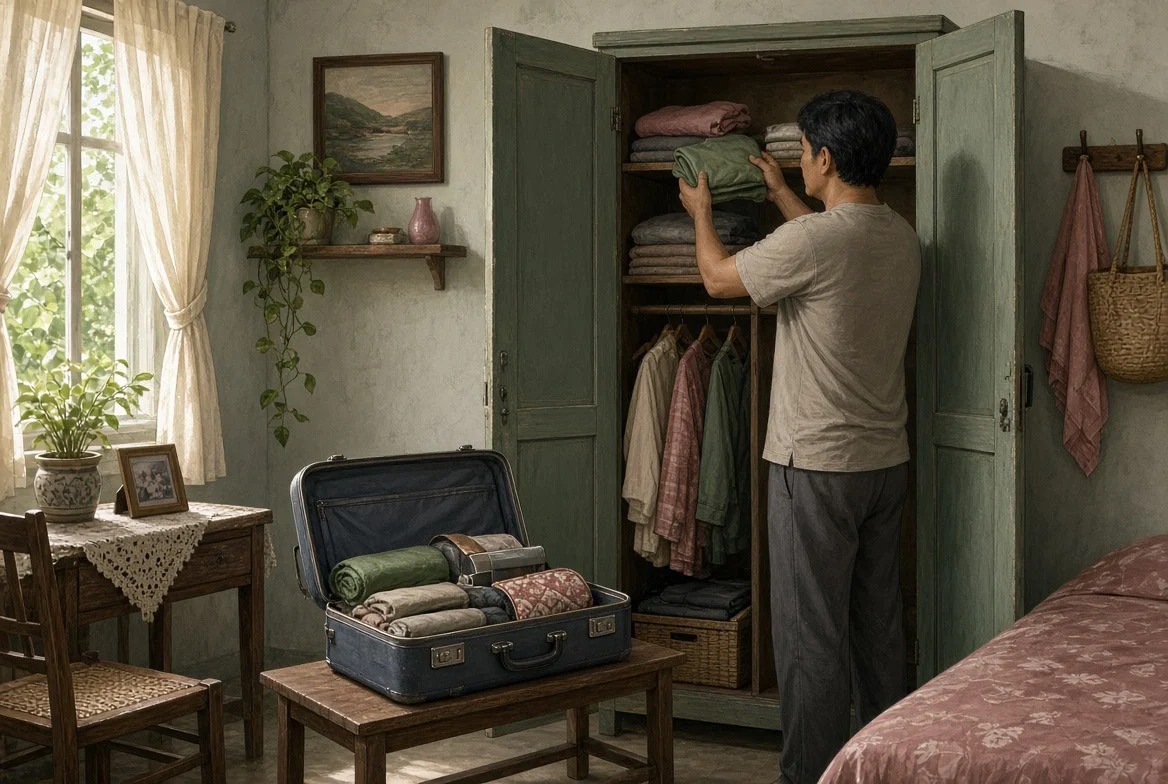
Relief and loneliness can arrive together. You can be glad to hear your family in the next room and still miss the ordinary life you built abroad: people who knew your working day, a familiar route, a little privacy, a version of yourself that felt capable.
Those feelings deserve room in the homecoming story too. You do not have to turn them into a verdict on whether coming back was right.
Perhaps everyone asks about your next job, but nobody asks what you miss. Perhaps you have unpacked everything except the feeling that you are visiting.
This guide is for OFWs returning to live in the Philippines, including those who came back unexpectedly. It offers ways to talk about changed expectations and find a workable daily rhythm. Short home leave has different pressures; take only what fits.
Jump to what you need:
- Understand reverse culture shock
- Identify what you miss
- Reconnect with a changed family
- Build an everyday routine
- Talk about money and privacy
- Keep meaningful overseas connections
- Use a flexible first-month plan
- Find additional support
- Read the FAQ
What Reverse Culture Shock Means
Reverse culture shock describes the readjustment involved in returning to your home environment after living in another culture. Oregon State University’s re-entry guidance explains that routines, relationships and perspectives can change, leaving familiar surroundings feeling different. That resource is written for students, not a study measuring OFW experiences.
The term gives you a way to describe the experience. It cannot tell you whether you have a mental-health condition, or explain every difficult thing happening after your return.
For migration more broadly, IOM’s Reintegration Handbook treats reintegration as involving economic, social and psychosocial dimensions. Earning again, accessing services and rebuilding personal connections can all matter. A plane ticket completes the journey; it does not settle every part of living at home.
You do not need to fit a chart of emotional stages. Start with the difficulty in front of you: a family disagreement, an empty afternoon, a lost sense of independence, an urgent housing problem. Different problems need different responses.
If the main pressure is income, use the separate OFW return-home job and savings guide alongside this one. Practical hardship deserves practical help, not only encouragement to adjust your attitude.
Notice What You Are Missing
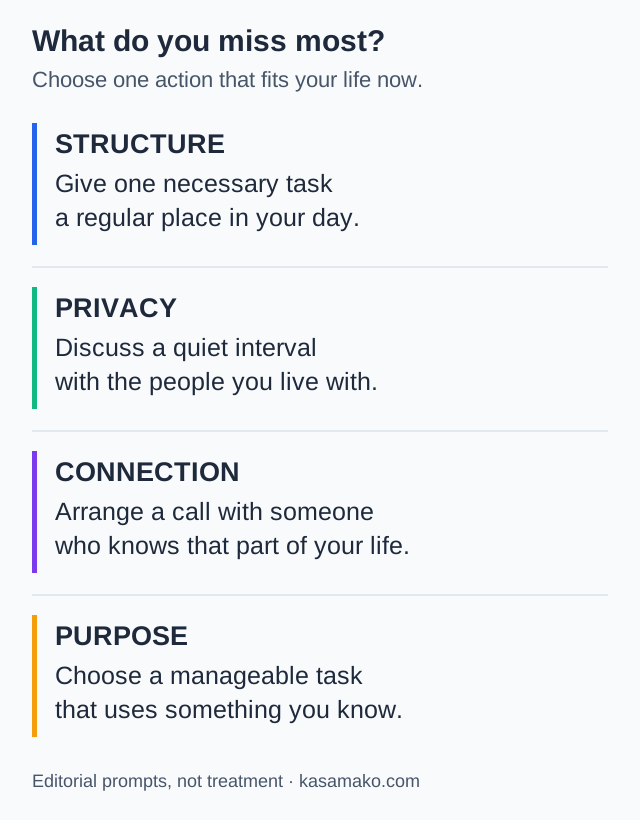
Try finishing this sentence privately: “The part I miss most is…”
Be more specific than “everything abroad was better.” Were you trusted to run a shift? Did you have someone to eat with? Could you decide how to spend your day off without explaining yourself? Did an ordinary errand have a predictable beginning and end?
You can use the answer to choose a small experiment:
| What you miss | Something you could try |
|---|---|
| Being recognized for your skills | Ask a former colleague for a reference or reconnect with a relevant professional group. |
| A little privacy | Agree on a quiet interval or ask people to knock before entering a shared sleeping space. |
| Familiar company | Arrange a call with someone who shared that part of your life. |
| A day with a clear shape | Give one necessary task a regular place in the day. |
These are suggestions to adapt, not a test or treatment plan. None requires you to pretend that a small action can replace a lost salary or an important relationship.
You may also miss something from a job you were relieved to leave. Missing a colleague does not make mistreatment acceptable. Keeping a useful habit does not mean you want the entire old life back.
Make Room for the Family That Changed Too
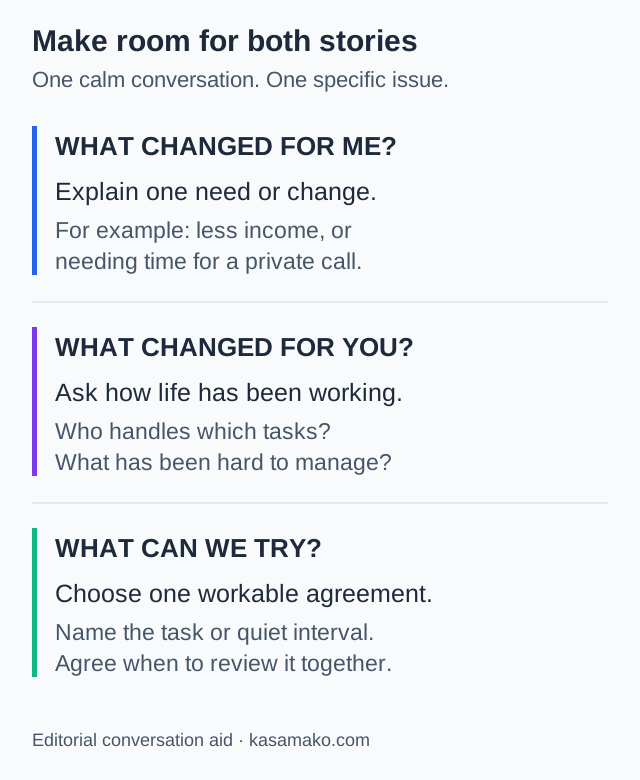
Before changing a household routine, ask how it has been working.
Who has been handling school messages? Who buys groceries? What does your partner need help with? What responsibilities did a parent or sibling take on while you were away?
You may be eager to participate again. The people at home may also need you to notice the work they have been doing. IOM’s guidance on psychosocial reintegration, section 2.6, recognizes that migration can change relationships and that reconnecting with family and friends can be difficult after return.
Start with one conversation rather than a family-wide correction of everything that feels unfamiliar:
“I want to understand how things work now. What has been hardest to manage? Can we choose one responsibility I can take on?”
Then explain something about your own adjustment:
“I’m happy to be here. I’m also getting used to having less time alone. Can we agree on a little quiet time after lunch?”
These are example sentences, not promises that the other person will agree. Choose a calm moment and an issue small enough to discuss. If the conversation becomes a list of everything either of you ever did wrong, return to the immediate question or agree to revisit it later.
With children, offer ordinary time together without demanding a particular reaction. Ask about a game, help with a familiar task, or invite them to choose an activity. Do not make instant affection the proof that the years of sacrifice mattered. Avoid criticizing the caregiver they relied on while you were away.
For family reading this: ask what the returning person wants to keep from their life abroad, as well as what they are glad to leave behind. Let them decide which stories are private. You can welcome someone without expecting them to become exactly who they were before departure.
Build a Day You Can Live In
Look at tomorrow before trying to redesign your whole future.
The WHO guidance on stress recommends a daily routine, attention to sleep and meals, and connection with people you trust. It also recognizes that people respond to stress differently. Use that as a starting point, not another standard you must meet perfectly.
Here is an editorial planning exercise: choose a manageable place in the day for basic care, one useful task and one connection. The task could be an application, a household responsibility or arranging a health appointment. Connection could be a conversation during a chore. It does not have to cost money.
If you already work long hours or care for someone, you may need to remove an obligation rather than add another. If movement is painful, unsafe or inaccessible, do not turn a walking suggestion into a requirement.
Consider this fictional example, not a reader’s case. A returnee is applying for jobs while staying with relatives. Everyone assumes that being at home means being available for errands. Instead of announcing a complete new schedule, they ask to keep one application period uninterrupted and agree to do the grocery run afterward. They also arrange a call with a former colleague at a time that suits both.
At the end of the week, they review the arrangement: Was the time actually protected? Did another person inherit too much work? What needs changing? The example ends with a review, not a claim that loneliness has disappeared.
Talk About Money and Privacy Early
Coming home changes what people can see. They may see you available at lunchtime without seeing the applications, recovery or uncertainty filling your day.
You can explain the present situation without opening every bank statement or defending every decision you made abroad:
“My overseas income has stopped. I need to check what I can contribute now. Let’s discuss the household essentials before I promise anything extra.”
For relatives expecting constant visits:
“I’d like to see you. I can’t host everyone this week. Can we arrange a time that works for us both?”
For questions you do not want to answer:
“Hindi pa ako ready ikuwento lahat. Salamat sa pag-intindi.”
You can leave it there. A private experience does not become public property because someone helped with your departure.
At the same time, shared living involves negotiation. Asking for privacy works better when you say what you need and listen to what others need: a quiet call, advance notice of visitors, or permission before family photos are posted. In a crowded home, a short agreed interval may be more realistic than a separate room.
Use the family-money boundary scripts for more detailed conversations. If requests come with threats, violence or control of your money and movement, prioritize safety and outside assistance rather than treating them as an ordinary disagreement.
Keep the Parts of Overseas Life That Matter
You can bring more home than luggage. Choose what is worth keeping: a friendship, a language, a recipe, a way of organizing work, or the confidence to ask a question before agreeing.
Make it specific. Instead of waiting for the old group chat to notice you are lonely, ask one friend when they are free to catch up. Instead of explaining an entire country to relatives who have never been there, share one story they can enter: a colleague who taught you something or a meal you learned to make.
There is also room for new relationships that do not depend on being a former OFW. A neighbor or colleague can know the person you are now without understanding every part of the years abroad.
Notice whether a particular conversation leaves room for your present life. You are allowed to change the subject when a group turns every exchange into salary comparisons, migration pressure or questions about what you bought. Staying connected does not require performing success.
An Adaptable First-Month Plan
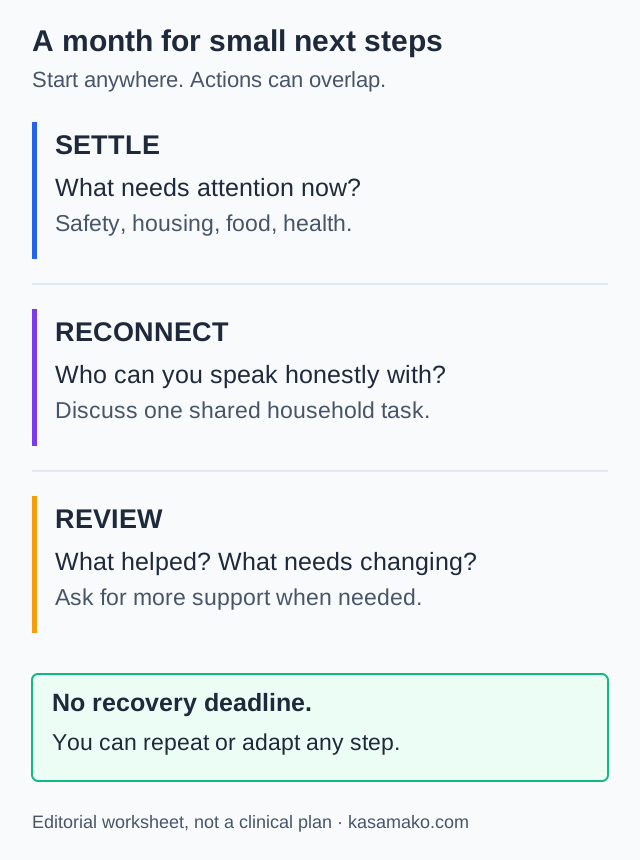
Use your first month as a place to organize a few actions, not a deadline for feeling settled. Start wherever you are, including months after returning. The suggestions below are Kasamako’s planning prompts, not a clinical recovery schedule.
Settle the immediate needs. Write down what needs attention now: somewhere safe to sleep, food, existing health care, essential documents and an income question. Ask which item needs another person’s help. You do not have to solve the entire list before contacting someone.
Reconnect in a manageable way. Choose one person you can speak honestly with. Ask a household member what has changed since you left. Offer a specific contribution that fits your current capacity, rather than promising to take over everything.
Review what happened. Keep the arrangement that was useful. Change the one that was impractical. If privacy was the problem, did a quiet interval help, or is a different conversation needed? If an appointment was unaffordable, can the clinic explain another referral route?
You can repeat all three in the same week. A person who returned suddenly may need housing or health support before reconnecting socially. Someone with stable work may mostly need a way to participate in family life again.
Keep a simple note with four lines: what I need, one next action, who can help, when I will check again. If writing is a burden, talk it through with someone you trust. Do not score yourself against another returnee’s homecoming photos.
When You Need More Support
The phrase “reverse culture shock” should not become a reason to dismiss worsening distress. WHO advises seeking help when coping is difficult, including when persistent symptoms affect daily functioning. A health professional can help assess what is happening.
You could begin with a health center, doctor or qualified mental-health professional and ask about assessment, costs and referral options. Describe what has changed in concrete terms: sleep, eating, work, caring for yourself or getting through ordinary responsibilities. You do not need to arrive with your own diagnosis.
For return-related assistance, ask the DMW office serving your area what support or referral fits your situation. DMW Region 2’s July 2026 explanation of its reintegration program includes psychosocial and welfare support. That is an official regional signpost, not a guarantee of the same appointment, benefit or eligibility everywhere. Ask what is available locally and what documents are required.
If you think you may harm yourself or cannot stay safe, seek urgent help. Contact emergency services or go to the nearest hospital emergency department; ask a trusted person nearby to accompany you or stay with you. WHO’s suicide guidance recommends emergency or crisis support for immediate danger. Do not wait for a comment reply here.
For people in the Philippines, the Quezon City Government’s September 2026 notice lists NCMH crisis contacts including 1553, 0917-899-8727 and 0919-057-1553. These numbers were checked against the official listing on October 8, 2026; call connectivity was not tested. If a number will not connect and danger is immediate, seek emergency care. Outside the Philippines, use local emergency and health services rather than relying on a Philippine short code.
FAQ
How long does reverse culture shock last?
This guide cannot give you a personal deadline. Re-entry experiences vary, as Oregon State’s guidance explains. Ask what is becoming workable and what still needs help. You can seek support at any point; you do not need to complete the first-month plan first.
Is reverse culture shock the same as depression?
No. The term describes readjustment; it does not diagnose or rule out depression. WHO describes depression as a condition involving persistent depressed mood or loss of interest, with effects that can reach across daily life. Ask a qualified professional to assess concerning symptoms rather than deciding they must be part of coming home.
What if my family says I have changed?
Ask what specific change they mean. A disagreement about household responsibilities needs a different conversation from criticism of your accent or friendships. Explain one need without turning the discussion into a competition over who sacrificed more. You can acknowledge their experience without agreeing to every expectation.
What if I came home unexpectedly?
Start with immediate safety, health, housing and essential expenses. You do not owe everyone the full story. Ask an appropriate health service, DMW office or trusted support person for help with the next practical step. A routine worksheet cannot replace assistance with urgent problems.
Does wanting to work abroad again mean returning was a mistake?
It does not have to carry that meaning. Consider the next opportunity on its actual terms: the job, costs, contract, health needs and family arrangements. Separate what you hope a move would change from what would still need attention. You can reconsider your plans without treating either staying or leaving as a test of loyalty.
What Kasamako Is Building
Kasamako is developing practical OFW guides and a pre-signing employment-contract checker. It is not a counseling or crisis-response service. For updates on the tools in development, join the early-access list. Please use qualified services for health or urgent safety needs.
Sources and a Word About Me
Sources checked October 8, 2026:
- Oregon State University: Transitioning Back Home - re-entry terminology; student guidance, not OFW prevalence evidence.
- IOM Reintegration Handbook: integrated approach and individual assistance, section 2.6 - economic, social and psychosocial dimensions. Relevant passages checked through indexed official text; direct PDF access was restricted during review.
- WHO: Stress, Depression and Suicide Q&A - coping, professional support and urgent-help guidance.
- DMW Region 2: reintegration program - regional description of support; confirm local availability.
- Quezon City Government: National Suicide Prevention Week - official NCMH contact listing.
Related reading:
- OFW Retirement: Stay Abroad or Return to the Philippines? - if returning is part of retirement, check income, healthcare and residence options alongside emotional readiness.
- OFW Returning Home: The 90-Day Job Gap No One Plans For - organize income and job-search needs alongside personal readjustment.
- OFW Boundary Setting: Saying No to Family Money Demands - explain changes in what you can contribute.
- The Loneliness Nobody Talks About: A Letter to a New OFW - connection and support on the other side of the journey.
Kasamako (in development): Join the early-access waitlist.
I’m a software developer, not a doctor, psychologist, counselor, lawyer or financial adviser. This article is educational, not medical, mental-health, legal or financial advice. It cannot diagnose a condition or assess immediate risk. Government contacts, services and eligibility can change; verify current details with the relevant office. No affiliate links. No paid placements.
Ingat lagi.
Comments
You can also email team@kasamako.com. Email is private and is not posted as a comment.