Where Will You Spend an Ordinary Tuesday?
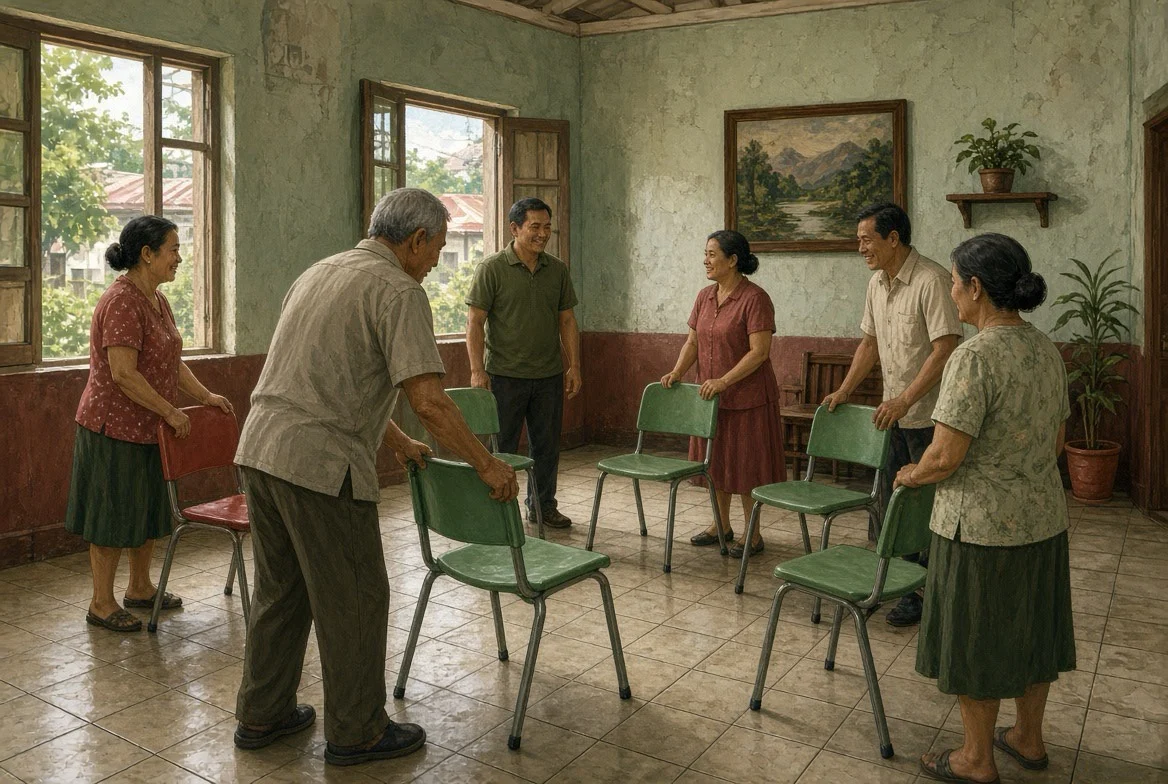
Picture an ordinary Tuesday after your last overseas shift. Not the welcome-home party. Not a holiday. There is breakfast to make, an errand to run, someone you might call, and a bill that still needs paying.
Where does that day happen? Who is nearby if you need help? And what pays for it when your salary no longer arrives?
You may have spent years answering those questions for everyone else. This guide makes room for your own answers: staying abroad, returning to the Philippines, or arranging a transition.
Stopping overseas work, stopping all paid work, receiving a pension, and moving home deserve separate dates on your plan. You do not have to accomplish all four together.
Jump to what you need:
- Check your right to stay
- Compare three retirement paths
- Build two budgets
- Check pension income
- Plan healthcare
- Discuss family support
- Test the move
- Use the decision checklist
- Read the FAQ
This is an educational planning guide, not personal financial, immigration, tax or medical advice. Official sources were checked on October 12, 2026. Country examples apply only to the systems described.
Start With Your Right to Stay
Before comparing living costs, find the document that lets you remain in your host country. Write down its exact category, expiry date, and what happens when your employment ends. Check your partner’s status separately, including whether either of you depends on the other’s sponsorship.
For example, the UAE’s ICP residence-cancellation guidance lists different grace periods by permit category and addresses cancellation or temporary holds for sponsored family permits. Do not borrow a colleague’s deadline or treat a temporary hold as a retirement residence route. Ask the responsible immigration authority what applies to your actual permit before resigning or booking a permanent move.
Long-term status also needs checking. Canada’s permanent-resident guidance says maintaining PR status generally requires at least 730 days in Canada during the last five years; the days need not be consecutive, and certain time abroad may count. This is a Canadian PR rule, not a universal rule for migrants or Canadian citizens.
For a two-country plan, ask about permitted absences and re-entry documents. Check health coverage and tax residence separately; an immigration answer does not settle those questions.
If your citizenship has changed, also confirm your basis for long-term residence in the Philippines. Do not assume an old Philippine passport establishes your current status.
Treat an unresolved residence question as something to resolve before committing money, not a small disadvantage that cheaper groceries can offset.
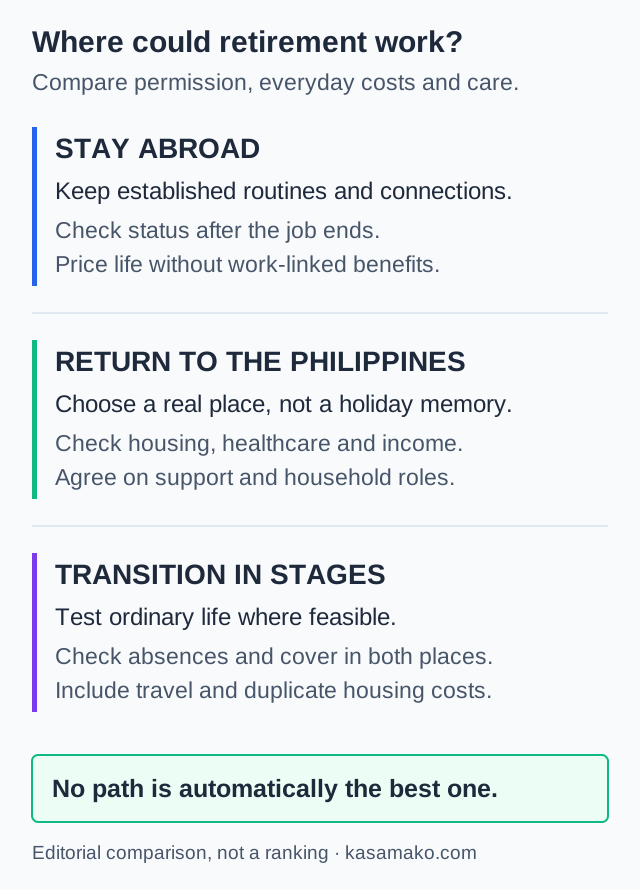
Compare Three Retirement Paths
Use this editorial comparison to identify what needs evidence. It is not a country ranking.
| Path | What you may want to preserve | What must be checked |
|---|---|---|
| Stay abroad | Established routines, relationships and care providers | Residence without the job, replacement for work-linked benefits, and costs without salary |
| Return to the Philippines | Closeness to people, language and a place you want to live | Actual housing, healthcare, pension payments and household expectations |
| Transition in stages | Time to test everyday life before a larger commitment | Legal absences, cover in both places, travel costs and duplicate housing expenses |
Staying abroad need not mean you have forgotten home. Returning need not mean the overseas years failed. A staged move is not automatically the safest option if maintaining two households strains your money or complicates your status.
If a contract ends before you are ready, the immediate task may be safe housing and an income bridge, not a final retirement decision. The return-home income guide covers that transition in more detail.
Ask which path is workable under your present circumstances, then identify what would need to change before another path becomes possible.
Build Two Budgets Without Your Salary
Compare two specific places, not “abroad” against “the Philippines.” Use the same household size and standard of living. Collect current quotes rather than comparing your actual overseas rent with a relative’s memory of provincial prices.
For each location, list:
- Housing payments, maintenance, utilities and any property-related charges.
- Food, transport, communications and ordinary personal expenses.
- Insurance, appointments, medicines and help you would pay for yourself.
- Debt repayments, dependents and agreed family support.
- Irregular expenses such as repairs, renewals and visits to relatives.
Keep moving costs separate: tickets, shipping, deposits and a possible overlap between homes. Do not count the same savings as both moving money and the amount available to support retirement.
A house you live in provides shelter, not monthly cash income. Potential rental receipts, a planned store and a child’s offer to help should not enter the dependable-income column as though the money is already arriving. For existing rent or business income, account for expenses and interruptions.
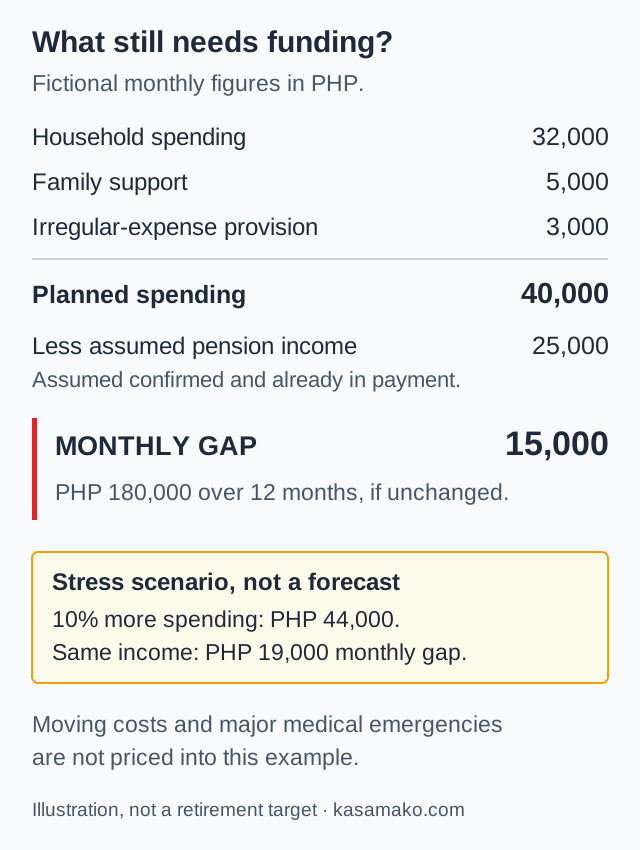
A fictional monthly gap
These figures are illustrative arithmetic, not typical Philippine living costs, an SSS pension estimate, or a recommended retirement budget.
| Monthly item | PHP |
|---|---|
| Ordinary household spending | 32,000 |
| Planned family support | 5,000 |
| Provision for irregular expenses | 3,000 |
| Total planned spending | 40,000 |
| Assumed confirmed pension income already in payment | 25,000 |
| Gap to fund | 15,000 |
That gap is PHP 180,000 over twelve months if these assumptions stay unchanged. It is not the total savings needed to retire.
Try a hypothetical stress case: spending rises by 10% while income stays unchanged. Spending becomes PHP 44,000, leaving a PHP 19,000 monthly gap. This is not an inflation forecast. Moving costs and major medical emergencies are not priced into this example; the small irregular-expense provision is not a promise to cover them.
Repeat the calculation using your real costs abroad. Where income and bills use different currencies, record the exchange-rate date and conversion costs, then test receiving less in your spending currency. Do not divide your savings by today’s gap and call the result a safe retirement duration.
Check What Your Pensions Will Actually Pay
Create one line for each pension: agency or provider, contribution record, eligibility date, estimated payment, deductions, receiving account, and actions required after moving. Mark an estimate as an estimate until the provider confirms the award.
SSS: check the record, not a friend’s payment
Under the ordinary conditions on the SSS retirement-benefit page, a monthly pension requires at least 120 monthly contributions before the semester of retirement. Optional retirement generally starts at 60, with separation from employment or cessation of self-employment/OFW work; technical retirement is at 65, whether working or not. Special occupational rules exist.
SSS distinguishes this from a lump-sum benefit for those meeting the relevant conditions with fewer contributions. Its guidance also offers continued voluntary contributions to complete 120 months. Ask SSS which option and claim route fit your record; do not assume you can buy back every missed month or that a friend’s amount predicts yours.
Overseas pensions: separate entitlement from payment arrangements
UK guidance allows eligible people to claim their State Pension abroad. The Philippines is on the government’s list of countries where annual increases are usually paid. Do not assume that returning to the Philippines freezes a UK State Pension. This does not establish your eligibility, amount or workplace-pension terms.
If your working years span countries, check for an applicable SSS bilateral social-security agreement. As a specific example, Canada’s Philippines agreement guidance explains how creditable periods may help establish eligibility, while each country calculates its benefit using its own creditable periods. That is coordination, not a single merged pension balance.
Payment permission is not a tax conclusion. UK guidance identifies tax residence and the applicable agreement as relevant to State Pension taxation. Ask a qualified adviser to review your Philippine and overseas position using the exact pension type, citizenship, residence and move date. No blanket tax exemption is assumed here.
Finally, map the interval between your last wage and first pension payment. An expected pension does not pay bills before it starts. A one-time employer settlement is also not a recurring pension; record its confirmed net amount separately.
Plan Healthcare Before Choosing a Home
Ask your employer or insurer for the written end date of your present cover. Then ask the replacement provider what will cover you from the next day, including while moving. Do not infer coverage dates from your visa expiry or final payday.
For a Philippine return, confirm your PhilHealth record and applicable membership category. PhilHealth lists lifetime-member qualifications, including the ordinary age-60-and-120-contributions route, separately from its Senior Citizen category. The latter includes citizenship, Philippine residence and membership conditions. Being a former OFW or receiving an overseas pension is not a substitute for checking your record, especially if you retire before 60.
PhilHealth’s benefits page describes case-rate deductions and package-specific benefits. Do not translate membership into a promise that every bill will be paid in full. Ask the intended facility which benefits apply and what you may need to pay; confirm whether any no-balance-billing protection applies to your actual case.
For each possible home, check:
- Where can you obtain your current care and prescribed medicines?
- What do appointments, transport and uncovered services cost?
- What exclusions, waiting periods, age limits or renewal conditions apply to proposed insurance?
- Who could accompany you or help at home, and have they agreed?
A relative in the same province is not necessarily available on a weekday morning. Put names and realistic arrangements in a private plan. Share medical records only with appropriate providers through secure channels, not in public comments.
Talk About Family Support and Everyday Life
Discuss what will change before people build plans around an income you will no longer receive.
You can care deeply about family and still need a different padala arrangement. Try:
“When my overseas salary stops, I need to budget from my confirmed income. Let’s agree on the essentials I can contribute to before making new commitments.”
Ask about care with the same honesty:
“I would like to live nearer you. What help would actually fit around your work and responsibilities? What would we need to arrange separately?”
Do not make a child’s willingness to care for you a test of utang na loob. A loving answer can still include limits. If you have no children, or family relationships are unsafe, consider trusted friends, community connections and affordable formal support instead of forcing a family-based plan.
Discuss your own daily life too. Who would you see without arranging a flight? What could you do that is meaningful and affordable? What privacy do you need? If you and a partner prefer different countries, name the needs behind each preference rather than voting on who is more loyal to home.
The family-money boundary guide offers more wording. You do not need to disclose your full bank balance to explain what you can sustainably contribute.
Test the Plan Before an Irreversible Move
Where your status, health and budget allow it, an ordinary-life visit can answer questions a holiday misses. Shop for normal meals, try the clinic journey, check the house’s daily costs and spend time with people who would actually be nearby. A trial visit is optional, not a condition for returning.
It also cannot prove that immigration, insurance or tax requirements are satisfied. Check those independently, especially before a long absence from a country where you want to retain status.
Before selling a home, ending a tenancy or making a major purchase, review:
- Where will you live if the first arrangement falls through?
- Which accounts, registered phone numbers and recovery methods will still work?
- Have you saved employment, pension, insurance and contribution records outside work email?
- What would trigger another review: a coverage problem, a higher budget, or a change in care needs?
For an unexpected return, focus first on essential documents, safe accommodation, continuity of existing care and immediate expenses. You do not need to solve your entire retirement before asking for help.
A decision can be deliberate without being permanent. Preserve practical options where you can, without paying indefinitely for an expensive two-country arrangement just because closing one chapter feels difficult.
Your Retirement Decision Checklist
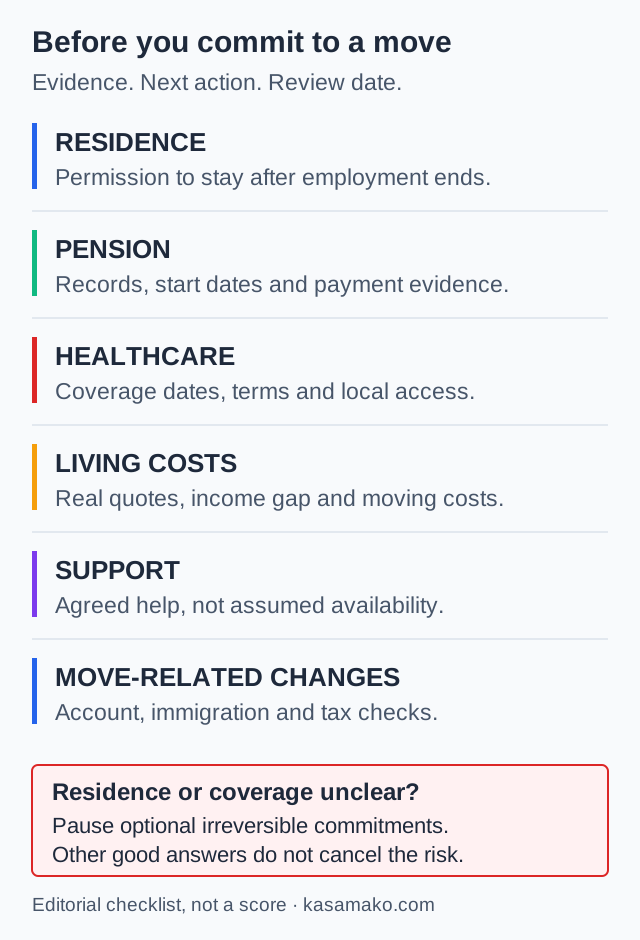
Make a private note with four columns: question, evidence, next action, review date. These are planning prompts, not a readiness score.
| Question | Evidence to collect |
|---|---|
| Can I live there after work ends? | Current status documents and route-specific confirmation |
| What income starts when? | Pension records, estimates or awards, and payment instructions |
| What covers my healthcare? | Membership confirmation, policy terms and coverage dates |
| Can I meet ordinary and irregular costs? | Actual quotes, income-gap calculation and transition budget |
| Who can help, and with what? | Specific, agreed care and household arrangements |
| What changes when I move? | Provider instructions and individualized immigration/tax review where needed |
If residence or health coverage remains unclear, treat it as a reason to pause an optional irreversible commitment. Do not average it away because several other boxes look good.
Choose one unresolved question and contact the person who can answer it. Progress may be a corrected contribution record or a family agreement, not a property purchase.
FAQ
Can I stay abroad when my work contract ends?
Do not assume so from years spent there. Check the basis and conditions of your current status, what employment ending changes, and whether another permitted route is actually available. The UAE and Canadian examples above show different questions, not interchangeable rules. Resolve your own position with the responsible authority before relying on a retirement-abroad plan.
Can I receive an overseas pension while living in the Philippines?
It depends on the pension system and your eligibility. The UK example above permits overseas claims for eligible people; it does not answer for every country or private scheme. Ask the paying agency about eligibility, payment destination, currency, required ongoing confirmations and any effect of moving. Check tax separately before treating a quoted gross amount as spending money.
Is owning a house enough to retire?
A usable, paid-off house may remove rent from your budget, but it does not pay for food, repairs, care or other obligations. Include maintenance and any remaining debt. Then compare recurring spending with dependable income. Do not assume a house can be quickly sold or rented for the amount you need when a bill arrives.
Can I split retirement between two countries?
Only build that plan after checking both countries’ entry and residence conditions, health coverage, tax position and payment arrangements. Include flights and duplicated costs. Canada’s PR example illustrates why absence rules matter; it does not authorize a particular travel schedule. A staged transition is an option to investigate, not a universal workaround.
What if I cannot afford to stop working yet?
Separate the need for income from a demand to remain in the same overseas job indefinitely. Examine lawful work options, costs you can change, benefits you may qualify for and a realistic transition timetable. If health or safety makes continued work untenable, prioritize appropriate assistance. A budget gap is a problem to address, not proof that you failed your family.
What Kasamako Is Building
Kasamako is developing practical OFW guides and a pre-signing employment-contract checker. It is not a pension provider, investment service or retirement adviser. For updates on the tools in development, join the early-access list. Please do not submit financial records or IDs through the waitlist.
Sources and a Word About Me
Official sources checked October 12, 2026:
- UAE ICP: Residence cancellation - permit-specific grace periods and family permits.
- Canada IRCC: Maintaining PR status - residence obligation and qualifying time abroad.
- SSS: Retirement benefit and bilateral agreements - eligibility and international coordination.
- Canada: Philippines pensions agreement - creditable periods and separate benefit calculations.
- UK: Claiming abroad, annual-increase countries, and tax considerations - UK State Pension only.
- PhilHealth: Lifetime members, senior citizens, and benefits - membership categories and benefit mechanics.
Related reading:
- OFW Investment Guide: Where to Put Your Savings in 2026 - distinguish accessible spending money from longer-term savings choices.
- SSS, PhilHealth, and Pag-IBIG: How to Pay From Abroad - organize official account access and contribution records.
- Coming Home Feels Different: An OFW Guide to Reverse Culture Shock - prepare for changes in routines and relationships.
I’m a software developer, not a financial, tax, immigration, legal or medical adviser. This article is educational, not personalized advice. The budget and checklists are original planning examples, not official formulas or investment recommendations. Government rules and eligibility change; verify your own circumstances directly. No affiliate links. No paid placements.
Ingat lagi.
Comments
You can also email team@kasamako.com. Email is private and is not posted as a comment.