
Buying Property Is a Chain, Not One Transaction
Buying property involves a chain of handoffs. Your budget becomes an offer. The offer depends on a seller with authority to sell. The contract sets the conditions for payment. Tax and registration documents allow the transaction to move through government offices. Inspection checks what you will actually receive.
As an OFW, you may be coordinating all of this between shifts. A sibling visits the site. An agent sends photos. A representative queues at an office while you are asleep in another time zone. Owning a home back in the Philippines is possible, but each person needs a clear job, and each payment needs a clear condition.
This guide gives you a working sequence. Some stages overlap, especially when a lender or developer is involved. Use it to organize your purchase with a Philippine lawyer and the relevant offices, rather than treating it as a universal closing schedule.
Jump to what you need: choose your route, ownership eligibility, budget, title records, seller and project, inspection, financing, overseas signing, contract, payment, registration, turnover, or already paid.
This is educational guidance, not personalized legal, tax, or lending advice. Have the actual property and documents reviewed before committing money.
Before Step 1: Choose Your Route
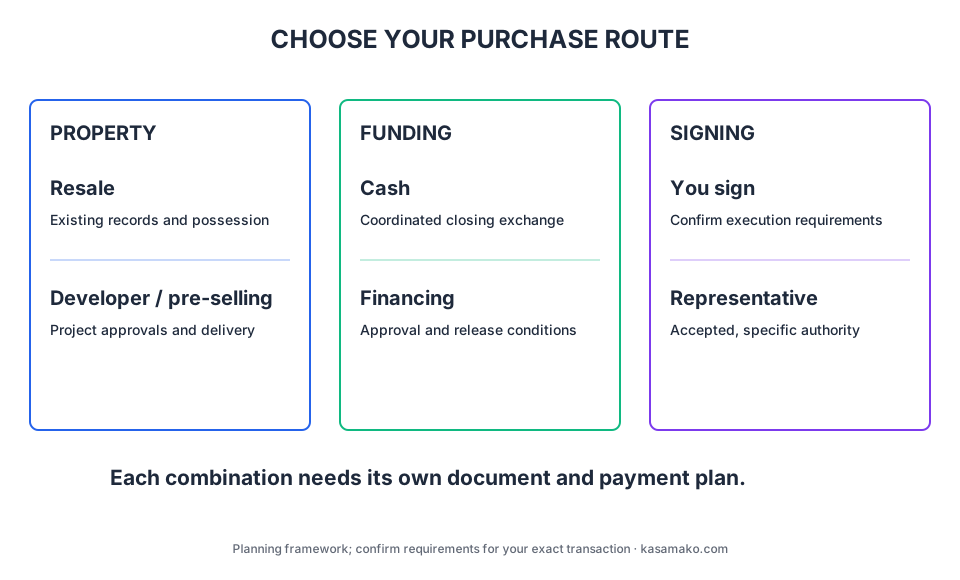
Write down three answers before collecting documents:
| Decision | What changes |
|---|---|
| Resale or developer/pre-selling? | An existing property’s records and possession differ from a project’s approvals, construction obligations, and future title delivery. |
| Cash or financing? | A lender adds eligibility, appraisal, mortgage, and release conditions. Developer installment terms need their own review. |
| You sign or a representative signs? | A representative needs authority accepted for the particular acts and institutions involved. |
For a resale, start with the registered owner and current property records. For pre-selling, ask which project, phase, lot, or unit your payment covers and what exists today. A model unit may show finishes without proving your unit is ready or its title available.
This guide focuses on residential purchases. Untitled land, agricultural or agrarian-reform property, unresolved estates, and disputed possession need a separate legal review before you follow an ordinary resale checklist.
Step 1: Confirm Who Can Legally Own the Property
Establish your current citizenship and proposed ownership arrangement first. Working abroad is different from having acquired foreign citizenship. Marriage, co-ownership, and the source of purchase funds also deserve discussion with your lawyer.
Article XII, Sections 7 and 8 of the Philippine Constitution restrict private-land transfers and provide for former natural-born Filipino citizens subject to statutory limits. If you have become a foreign citizen, ask which rules apply to your present status before reserving land.
A foreign spouse’s ability to acquire a condominium interest is a separate question. Section 5 of the Condominium Act ties transfers to the ownership structure of the common areas and applicable nationality restrictions. The word “condo” on a listing does not settle eligibility.
Pause here: get legal confirmation if citizenship, marital rights, or the proposed title names are unclear. Putting the property in a relative’s name changes the ownership arrangement; paying for it does not automatically put your name on the title.
Step 2: Set the Full Budget Before Browsing
Choose a total acquisition ceiling and a separate amount you can carry each month. Keep overseas living expenses, family commitments, and return-home money visible in the same plan.
Ask for written estimates covering:
- the price and required upfront payments;
- legal review, inspection, survey, and document expenses;
- applicable taxes, registration, notarial, and transfer expenses;
- loan charges, insurance, interest, and possible repricing;
- association dues, utilities, repairs, fit-out, and ongoing property tax;
- remittance conversion, courier, travel, and representative expenses.
Ask who legally owes each tax and who has agreed to bear the cost. Have that allocation reviewed. A sales agent’s estimate should not replace the relevant office’s computation or a tax professional’s advice.
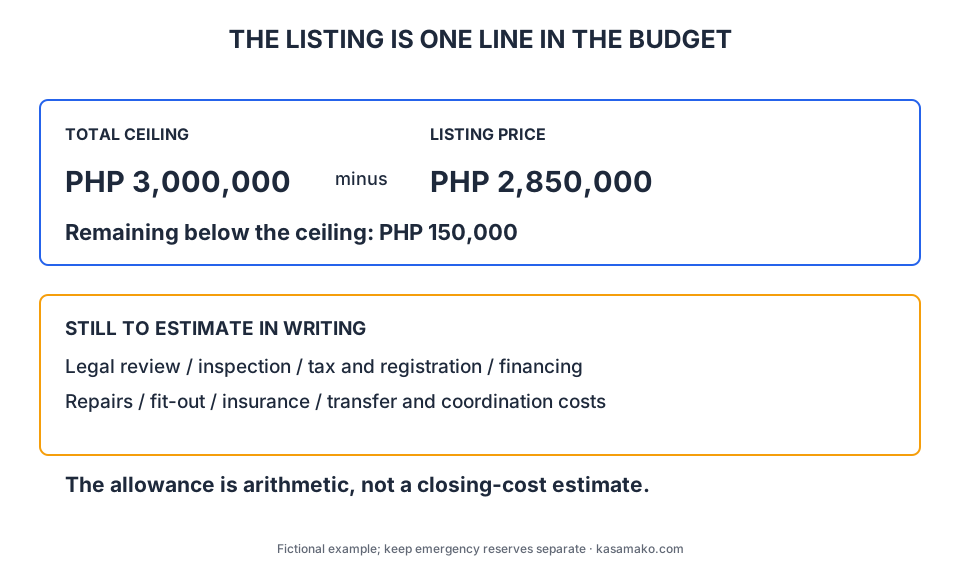
Fictional example: your total acquisition ceiling is PHP 3,000,000, and you have PHP 650,000 available upfront. A listing at PHP 2,850,000 leaves PHP 150,000 below your ceiling for all remaining acquisition costs. That subtraction says nothing about whether the allowance is sufficient. You need the actual estimates and financing plan.
Do not count your protected emergency reserve twice, once as a down payment and again as money available if your job ends. Ask whether you can complete the purchase if income pauses, then carry it after returning home.
Pause here: proceed only after both the acquisition budget and ongoing obligations fit your circumstances.
Step 3: Verify the Property Record
Get the title details, then obtain an official certified true copy through the Registry of Deeds or an applicable LRA service. The LRA FAQ describes certified-copy requests and its computerized Registry services. Use the Registry of Deeds directory to locate the office concerned.
Have your lawyer compare the official record with the seller’s documents: registered names, property description, lot or unit identifiers, and every annotation. Ask what any mortgage, adverse claim, restriction, or other entry means for the sale and how it will be addressed.
Collect the relevant tax declaration and real-property-tax records too. They serve different purposes from a registered title. If a seller offers only a tax declaration or a share of a larger “mother title,” get specific advice about what can actually be transferred to you.
For land, have a qualified professional connect the technical description and survey to the actual site. The fence you see may not resolve the legal boundary or access rights.
Pause here: do not treat a clear-looking screenshot, an old copy, or a tax receipt as a completed title investigation. Recheck records before closing if time has passed or circumstances changed.
Step 4: Verify the People and Project
Identify who owns, who signs, and who receives money. Those may be different people, but each role needs supporting authority.
For a private resale, ask your lawyer which identity, marital, co-owner, corporate, estate, or representative documents are needed. If the registered owner has died, a relative’s statement that “all the heirs agree” should trigger an estate-document review.
For a developer purchase, obtain the exact project name, location, phase, registration, and License to Sell information. PD 957, Sections 4-7 provides the project-registration and licensing framework, including exemptions. Confirm applicability and status with the relevant DHSUD regional office. A company’s existence and a project’s authority to sell answer different questions.
DHSUD’s 2025 Citizen’s Charter identifies regional housing-regulation services. Ask the office to verify the particular phase rather than accepting a license shown for a different development.
Verify the broker’s credentials and the salesperson’s authority through the appropriate official channels. Confirm payment instructions directly with the seller or developer using independently established contact details.
Pause here: unresolved authority to sign, sell, or collect money is a reason to delay the transaction.
Step 5: Inspect What You Are Buying
Arrange a site visit even when you cannot travel. A trusted relative can show you the surroundings, while an independent inspector, engineer, or survey professional checks matters within their expertise.
For an existing house, request dated photos and a written report covering defects, roof and drainage concerns, utilities, access, occupants, and included fixtures. Ask about repairs, unpaid charges, and when vacant possession will be delivered. Investigate flood exposure and other location risks independently of the listing.
For a condo, review management documents, dues, pending assessments, use restrictions, parking, and whether your intended occupancy or rental arrangement is permitted. For pre-selling, review approved plans, specifications, current construction, and written completion and turnover commitments.
Save the brochure and relevant messages. PD 957’s advertising and development provisions make advertised promises legally relevant for covered projects. Ask your lawyer how those promises apply to your purchase.
Pause here: resolve meaningful differences between the records, approved plans, contract, and site before accepting the property or committing further money.
Step 6: Secure Financing Before the Deadline
Start lender discussions during budgeting. By this stage, you need a financing route aligned with the property and the seller’s payment calendar.
Ask Pag-IBIG or your bank for the current purchase-specific checklist, accepted overseas income evidence, appraisal process, approval conditions, equity requirement, and release requirements. Membership or a calculator result does not establish eligibility or guarantee funding.
Pag-IBIG publishes separate official checklists for purchase applications, HQP-HLF-730, and release of proceeds, HQP-HLF-735. The indexed February 2024 versions distinguish application documents from later title and mortgage requirements. Confirm the currently applicable version with Pag-IBIG; direct access may require browser verification.
Have the lender and seller agree on how signing, title transfer, mortgage registration, and payment will be coordinated. A loan can be approved while money remains conditional on further documents. Do not promise a release date based on a verbal estimate.
Request the written loan disclosure and ask about repricing, insurance, late-payment consequences, and early settlement. Assess repayment in pesos even if your salary is earned in another currency. Government-run lending is an option to investigate, not a recommendation or a promise of approval.
Pause here: obtain a written plan for funding gaps, rejected financing, and missed release deadlines before accepting a binding payment schedule.
Step 7: Build the Remote-Signing Plan
List every act someone must perform in the Philippines: submit documents, sign particular instruments, process tax filings, register documents, collect records, or attend turnover. Ask which you can do yourself and which require a representative.
A Special Power of Attorney, or SPA, should describe the intended authority. Have a Philippine lawyer prepare or review it, and obtain any lender-required form before arranging notarization. Consider limits on the property, permitted acts, payments, and delegation. Keep a copy of exactly what you signed.
There are two common routes to investigate:
- Philippine consular notarization: your embassy or consulate provides the applicable acknowledgement/notarial service under its requirements.
- Local notarization with foreign Apostille or legalization: follow the issuing country’s process and the applicable treaty or authentication route.
The DFA Apostille FAQ explains foreign-issued documents and distinguishes authentication of origin from approval of content. A foreign Apostille comes from the competent authority of the issuing country; Philippine embassies do not issue Apostilles.
For a U.S. example, the New York Philippine Consulate’s notarial guidance describes consular services and the separate U.S. Apostille route. Check your own post’s current procedures rather than applying that example worldwide.
Pause here: confirm the proposed document and execution route with the lender, lawyer, and receiving office before signing or couriering originals. Authentication cannot fix missing authority in the wording.
Step 8: Review Before You Sign or Pay
Send the complete draft to your lawyer, including reservation terms and attachments. Request a plain-language explanation of these points:
- exactly what is sold, by whom, to whom, and for how much;
- payment milestones and what happens if financing is delayed or refused;
- when possession and ownership obligations arise;
- how existing mortgages or other issues will be resolved;
- taxes and charges, included fixtures, completion, defects, and turnover;
- cancellation, refund, default, notices, and dispute procedures.
A reservation agreement may create obligations before the main contract arrives. Ask about its refund conditions before payment.
A Contract to Sell and a Deed of Absolute Sale have different legal effects. The Supreme Court’s Buce decision explains reservation of ownership under a contract to sell and the further conveyance that may be required. Have counsel interpret the substance of your document; its heading alone does not determine your rights.
For covered installment transactions, RA 6552, the Maceda Law, provides protections that depend on payment history and other conditions. It does not create a universal reservation-fee refund. Developer failure may raise separate PD 957 issues. Get advice before invoking cancellation rights or withholding payments.
Pause here: signing and payment should follow review of the complete terms, including the small reservation form.
Step 9: Pay Through an Authorized Channel
Follow the closing sequence your lawyer, seller, and lender have agreed on. For a cash resale, ask how payment, signing, and delivery of necessary documents will be coordinated. Do not improvise that exchange through chat.
Verify the payee and account independently. If an agent proposes a personal account, require a satisfactory explanation and documented collection authority before transferring anything.
For each payment, preserve the amount, date, currency conversion, transfer reference, purpose, property identifier, and seller’s written acknowledgement. Obtain the appropriate receipt or supporting payment document and reconcile it against the balance due. A bank debit proves money left your account; you also need evidence of how the seller credited it.
If account details change, call a verified contact. Avoid confirming a changed account solely through the message that announced it.
Pause here: unexplained payee changes or missing acknowledgement should be resolved before the next transfer.
Step 10: Complete the Transfer and Registration
Assign a person to each filing and deadline before the deed is executed. Some tax and local obligations run from the transaction date; waiting for another office’s document may not pause them. Have your lawyer or tax professional confirm the deadlines and sequence for your case.
| Office or participant | What to coordinate |
|---|---|
| BIR / relevant Revenue District Office | Applicable tax computation, returns, payment evidence, and eCAR processing. |
| LGU treasurer and assessor | Local transfer-tax requirements, property-tax clearance, and tax-declaration updates. |
| Registry of Deeds | Registration requirements, filing, fees, and resulting title/annotations. |
| Lender or developer | Mortgage, release, title-delivery, and document-custody conditions. |
BIR’s eONETT portal handles one-time transactions involving property sales and donations. Obtain the current checklist from the RDO responsible for your transaction. Different transactions can require different tax treatment; avoid choosing forms from a generic online rate table.
The LRA’s Circular 10-2020 lists sale-registration documents including the deed, BIR eCAR, title documents for registered land, and relevant local tax records. Use it as a reference and confirm current requirements with the RD.
After registration, verify the resulting title details and mortgage annotations with counsel. Follow through on local assessment records: Quezon City’s assessor illustrates the separate services involved, but your property’s LGU determines its own requirements.
For developer purchases, establish who handles each stage and what evidence you receive. Physical turnover and individual-title delivery may happen at different times.
Pause here: keys, an eCAR, and a new tax declaration each evidence a different part of the process. Verify registration itself rather than assuming another milestone completed it.
Step 11: Inspect Turnover and Keep the File
Inspect again at handover. Record defects with dated photographs and a written punch list. Agree on repair responsibilities, follow-up dates, meters, access devices, fixtures, and any remaining occupants or possessions.
Ask your lawyer about the effect of acceptance documents before signing a statement that everything is complete. Keep written records of unresolved items and notifications.
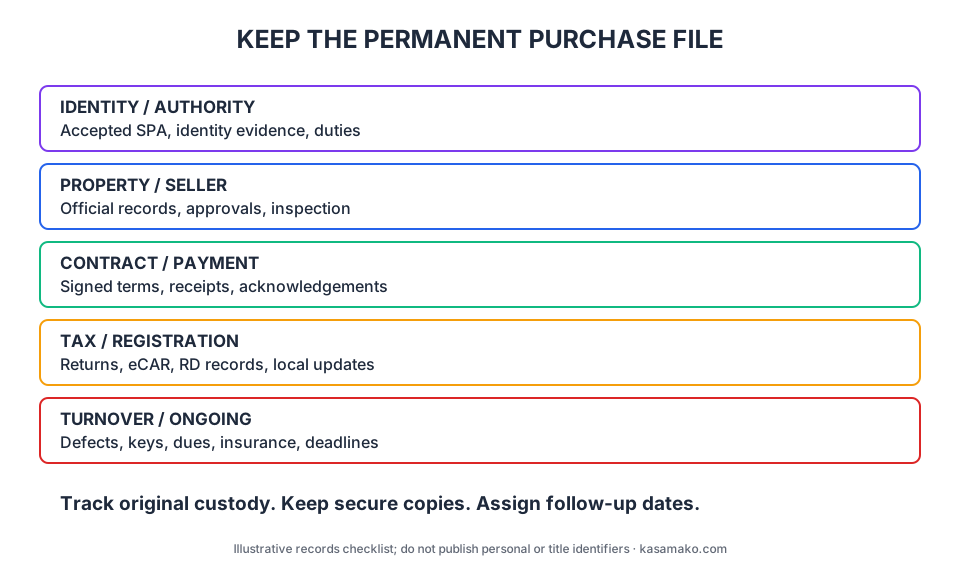
Build a permanent file containing authority documents, verified property records, contracts, payment evidence, tax and registration documents, and turnover reports. Note who holds each original, especially if a lender has custody of title documents. Keep secure backups and a schedule for payments, taxes, dues, insurance, and warranty follow-up.
Give your trusted contact a task list and reporting dates. Helping family members should not have to guess what to pay, which document to collect, or what they can sign.
One-Page OFW Property Buying Sequence
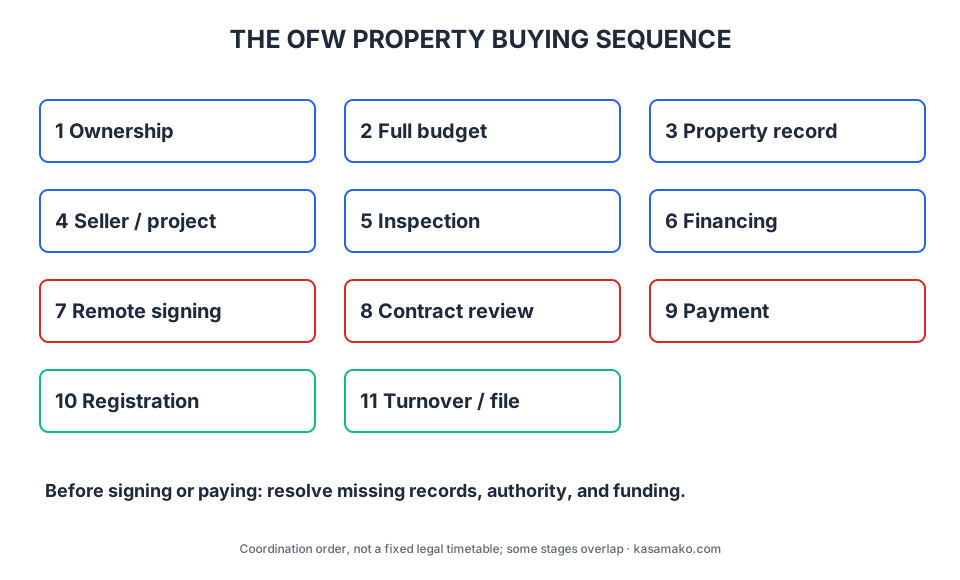
Use this as a coordination checklist. Your lender or lawyer may change the timing of individual tasks:
- Confirm the intended owners’ eligibility and legal arrangement.
- Set total acquisition and ongoing budgets.
- Verify official property records.
- Verify seller, representative, and project authority.
- Inspect the site, unit, or project commitments.
- Align financing conditions with seller deadlines.
- Prepare accepted overseas-signing and SPA documents.
- Review the complete contract and reservation terms.
- Coordinate payment and preserve acknowledgements.
- Complete tax filings, registration, and local record updates.
- Inspect turnover and maintain the permanent file.
For deeper warnings at each stage, read the companion OFW Property Buying Mistakes guide.
If You Already Paid Before Checking
Gather the reservation agreement, contracts, receipts, transfers, advertisements, messages, and seller details. Ask in writing what you bought, how your payment was credited, which deadlines apply, and what cancellation terms the seller relies on.
Arrange an urgent legal review before another voluntary payment. If a contractual installment is already due, get advice promptly about payment and notice obligations; simply stopping can affect your position. Verify records and project status through the appropriate offices.
A refund depends on facts, documents, and applicable law. Preserve evidence and obtain case-specific help rather than relying on a promise that every reservation payment is recoverable.
FAQ
Can I buy property without returning to the Philippines?
You may be able to coordinate a purchase through accepted documents and an authorized representative. Confirm the transaction’s signing, identity-verification, lender, and registration requirements before assuming every task can be delegated.
Can my sibling be my attorney-in-fact?
A trusted relative may be a candidate, subject to the receiving institution’s requirements. Have the SPA reviewed, define their duties, and arrange records and reporting. Being your representative does not require putting the property in their name.
Is a reservation fee refundable?
There is no universal answer. Review the reservation agreement and applicable law before paying. If you already paid, ask for written cancellation terms and have your documents reviewed.
When should I hire a lawyer?
Before a reservation agreement or payment commits you, especially if ownership, title, seller authority, financing, or overseas signing is complicated. Ask for a written scope covering due diligence, contract review, and closing coordination.
Can OFWs use Pag-IBIG housing financing?
It is an option to investigate if you meet the current borrower and property requirements. Ask for your purchase-specific checklist and release conditions. Overseas employment does not guarantee approval.
When am I the registered owner?
Verify the completed registration and resulting title record with the Registry of Deeds and your lawyer. Ownership under the agreement, delivery, physical possession, and registration can involve different legal milestones.
What Kasamako Is Building
Kasamako is building practical guides and a pre-signing OFW employment-contract checker. The same habit matters here: identify what is written, what remains unverified, and who must answer before you commit.
The property guide is a planning resource. Kasamako does not verify titles, handle conveyancing, or receive purchase funds. Join the early-access list for updates on the tools being built.
Sources and a Word About Me
Sources checked September 29, 2026. Older laws and administrative documents are identified below; ask the relevant office for the currently applicable checklist.
- 1987 Constitution, Article XII and Condominium Act, RA 4726 - ownership framework.
- LRA FAQ and Registry of Deeds directory - official records and office contacts; older wording on overseas documents should be checked against current DFA guidance.
- PD 957 and RA 6552 - project and installment-buyer protections, subject to scope and facts.
- DHSUD Citizen’s Charter, 2025 first edition - regional project-regulation services.
- Pag-IBIG HLF-730 and HLF-735 - indexed February 2024 purchase and release checklists; direct document access encountered browser verification. Confirm current forms with Pag-IBIG.
- DFA Apostille FAQ and New York Philippine Consulate notarial services - document-authentication routes, not approval of an SPA’s substance.
- Supreme Court: Buce v. Heirs of Galang - contract-to-sell distinction.
- BIR eONETT and LRA Circular 10-2020 - tax-processing entry point and sale-registration reference.
- Quezon City assessor - local assessment services, used as a locality-specific example.
Related reading:
- OFW Property Buying Mistakes in the Philippines - examine the risks behind each purchase checkpoint.
- OFW Investment Guide: Where to Put Your Savings in 2026 - consider liquidity and concentration before committing savings to property.
- OFW Returning Home: The 90-Day Job Gap No One Plans For - keep your return-home runway separate from purchase money.
Kasamako (in development): Join the early-access waitlist
I’m a software developer building Kasamako, not a lawyer, licensed broker, tax professional, lender, or financial adviser. This article is educational, not personalized legal, tax, investment, or lending advice. The peso calculation is fictional and does not estimate your closing costs. Laws, administrative requirements, forms, fees, and eligibility can change. Verify current information and have your actual documents reviewed by qualified professionals.
No affiliate links. No paid placements. Kasamako does not sell property or loans, or collect purchase payments.
Buy in the right order, and keep every page. Ingat lagi.
Comments
You can also email team@kasamako.com. Email is private and is not posted as a comment.