Dear Bagong OFW
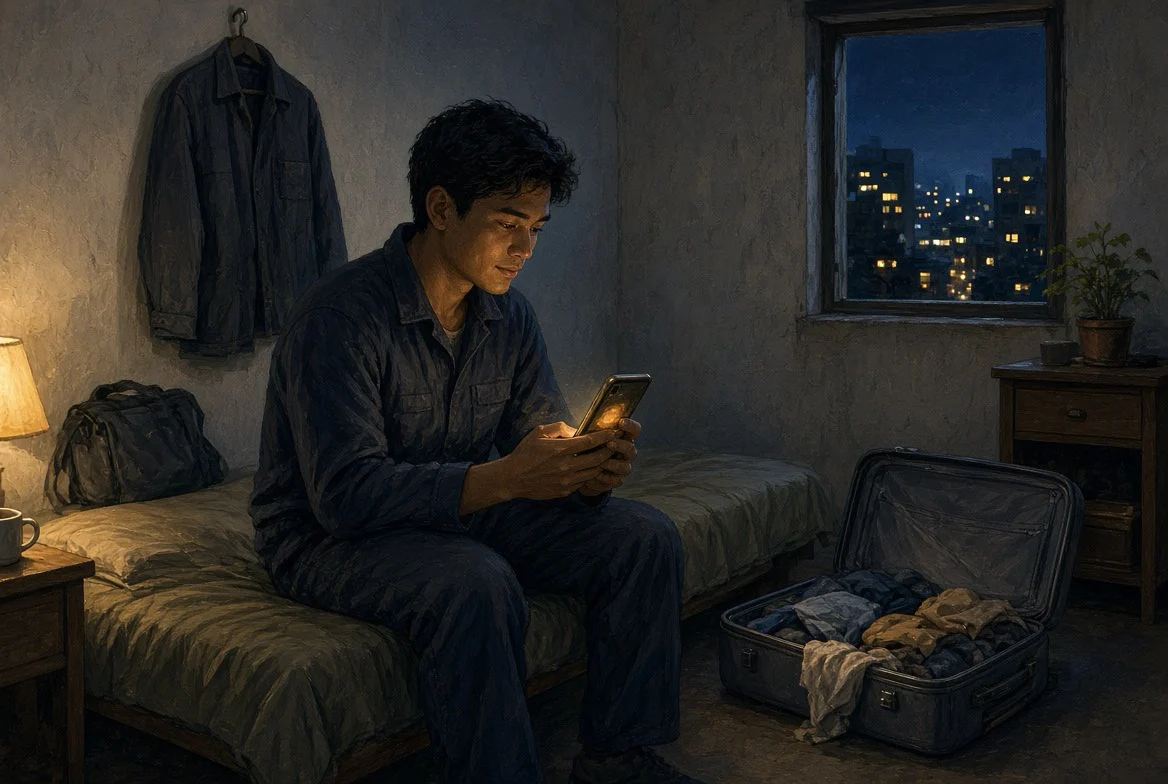
The first lonely night may not be your first night abroad. That night is too busy. You are finding the airport exit, listening for instructions, checking the room, and messaging home that you arrived safely.
It may come later, on your first day off.
Your uniform is hanging by the bed. Everyone at home is asleep because your time zones do not match. The group chat is full of bills, jokes, and ordinary life continuing without you. You open the call screen, then close it. You do not want them to worry. You do not want anyone to think you are ungrateful for the job you prayed for.
So let this letter say the thing you may not be ready to say:
You can be thankful for the opportunity and still feel terribly alone.
Jump to what you need:
- Understand why this does not mean you are failing
- See why arrival can get quiet later
- Make calls home feel more honest
- Build more than one lifeline
- Try a simple first-30-days plan
- Find connection without dropping your guard
- Recognize when it is more than loneliness
- Know when to ask for help
- Read the note for family at home
You Are Not Failing
Loneliness is not proof that you chose the wrong country, accepted the wrong career, or are too weak for OFW life. It is also not proof that you have a mental-health condition.
The World Health Organization describes loneliness as the painful gap between the connection a person has and the connection they want or need. That is different from social isolation, which is about having too few relationships or too little contact. You can be surrounded by co-workers, roommates, passengers, patients, customers, or an employer’s family and still feel unseen.
There is no correct deadline for feeling settled. Some people find their rhythm quickly. Others feel fine during the first busy weeks and struggle later. Your task is not to win an adjustment race. It is to notice what is happening before silence becomes your only coping method.
Why It Gets Quiet After Arrival
Before departure, everything had a next step: documents, medicals, training, packing, airport, immigration, pickup, accommodation, first shift. Even fear had a schedule.
Then the schedule becomes ordinary.
The food smells different. Humor arrives half a second too late because you are translating it. Your day off does not match your family’s free time. You may share a room without having anyone you trust. You may live with the employer and never feel fully off duty. You may be on a ship, a night shift, a remote site, or a route where there is no nearby Filipino community.
This is not just imagination. WHO’s guidance on refugee and migrant mental health identifies post-migration pressures such as separation from family and support networks, poor living or working conditions, language barriers, social isolation, discrimination, and difficulty accessing services. The same page also makes an important distinction: many migrants experience distress such as sadness, irritability, fatigue, sleep difficulty, or physical pains; for many, those reactions improve, while some people need further support.
Do not turn that into a self-diagnosis. Use it as permission to stop dismissing every difficult day as drama.
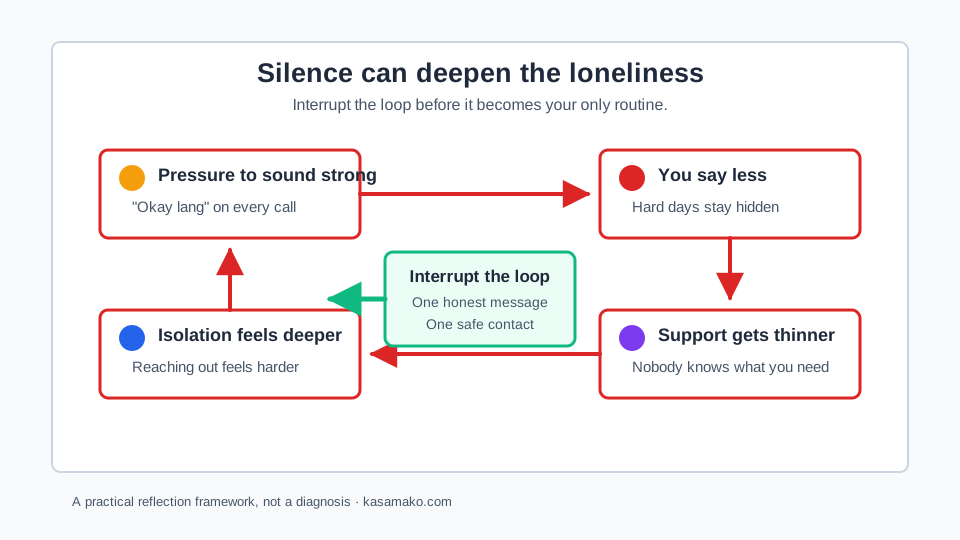
When Calls Home Make It Lonelier
You waited all day for the call. Then the questions begin.
How is work? When is payday? Did you send the documents? Can you add something to this month’s padala? Do you know what happened to your cousin? When are you coming home?
These may be normal family questions, not cruelty. But if every call becomes a report, a request, or a performance of success, you can finish it feeling farther away. You edit yourself because the family also sacrificed, the children miss you, and everyone believes the overseas salary means the hard part is over.
Try one honest sentence before you reach breaking point:
“Okay ako sa work, pero nalulungkot ako lately. Hindi mo kailangan ayusin agad; gusto ko lang may makinig.”
Or make one small boundary:
“Can we have one call this week na hindi muna bills ang topic? I miss hearing about ordinary things at home.”
You do not have to unload everything at once. Tell one person whether you need listening, practical help, distraction, prayer, or simply company while you eat.
If money requests are swallowing every conversation, the family-ATM guide has scripts for separating love from unlimited financial access. A boundary is not abandonment. It can protect the relationship you crossed an ocean to support.
Build More Than One Lifeline
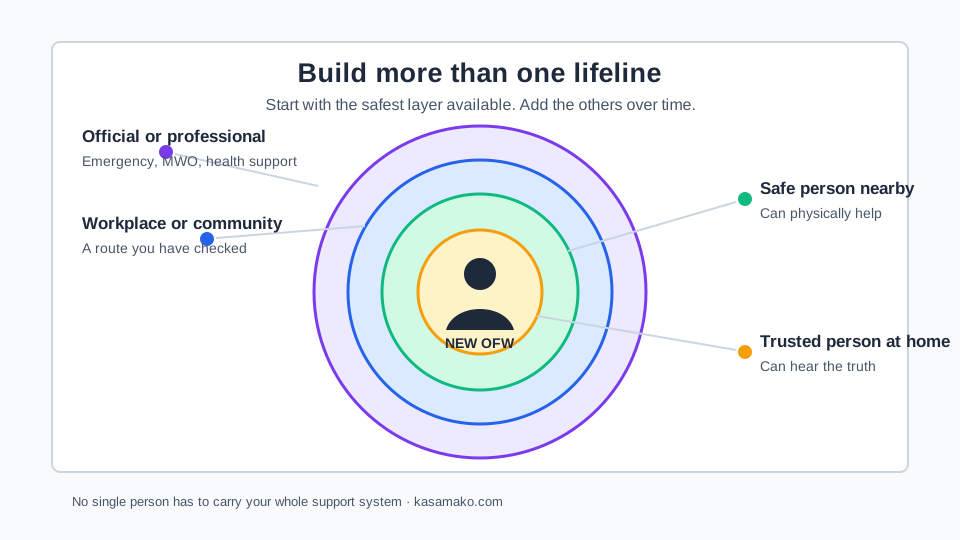
One caring person can change a difficult week. But one person should not have to carry your whole emotional, practical, and emergency world.
Build four layers where your situation allows:
- One person at home who can hear the truth. Choose someone who will not turn every feeling into family news. Agree on what they should do if they become seriously worried.
- One safe person nearby. This may be a co-worker, roommate, neighbor, faith-community contact, union representative, or community volunteer. Someone nearby can accompany you to a clinic or help you leave an unsafe place.
- One workplace or community contact. Know where HR, a supervisor, welfare officer, union, licensed clinic, or trusted organization fits. Check confidentiality and consequences before disclosing more than necessary.
- One official or professional route. Save the local emergency number, responsible Migrant Workers Office, and a local health service offline. A lost signal should not erase your map.
You may not have all four today. Start with the safest layer available. The goal is not a large social circle. The goal is that one unanswered call does not leave you with nowhere else to turn.
Your First 30 Days
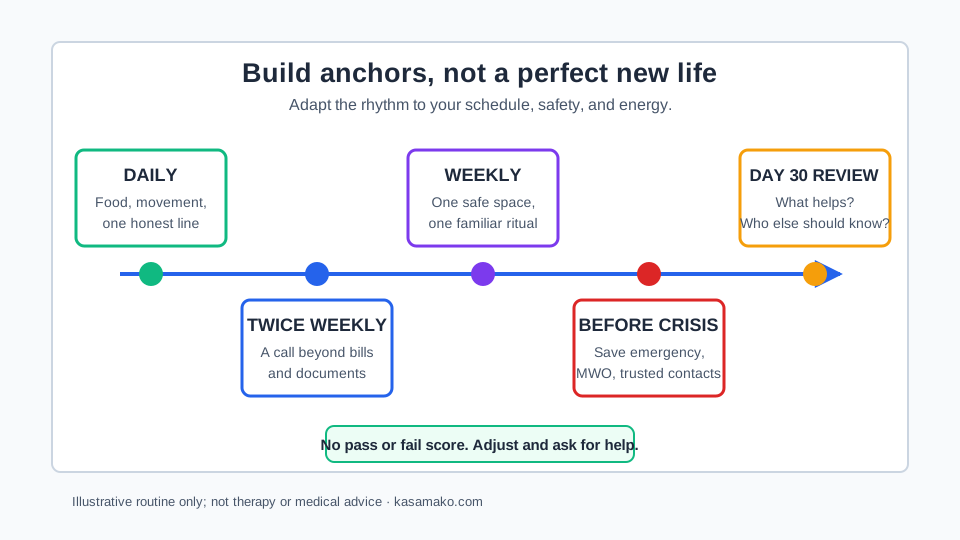
Do not demand that your first month abroad become a perfect new life. Build a few anchors you can repeat.
This is an example, not therapy and not a challenge you can fail:
| Rhythm | A small anchor |
|---|---|
| Daily | Eat one proper meal without scrolling if you can. Move or step outside safely. Send one honest line to a trusted person. |
| Twice a week | Schedule a call that is not only about bills, documents, or problems. |
| Weekly | Join or visit one safe, low-pressure space. Cook or buy something familiar. Notice your sleep, appetite, energy, and mood without scoring yourself. |
| Before a crisis | Save local emergency, MWO, workplace or HR where safe, and trusted-person contacts offline. |
| Around day 30 | Ask: What is helping? What is getting worse? Who else needs to know? |
Some anchors will be impossible during a long shift, employer-controlled schedule, voyage, or remote assignment. Adapt the plan. A familiar breakfast, Sunday music, prayer, or a friend’s voice will not solve exploitation or clinical distress, but it can give the week a shape while deeper connection grows.
Connection Without Dropping Your Guard
Loneliness can make the first friendly person feel safer than they have earned. You deserve connection, and you are still allowed to verify people.
Prefer public, established spaces at first: a known faith community, an embassy or MWO-posted event, a recognized professional group, a workplace gathering you can leave freely, a library, a sports group, or a community organization with a visible history. Tell someone where you are going. Arrange your own transport where possible. Keep control of your phone, documents, money, and address.
Be careful when a new contact quickly asks you to:
- lend money or receive money for them;
- hand over a passport, ID, SIM, bank account, or verification code;
- join an investment, loan, recruitment, or “side income” scheme;
- move to private messaging and hide the relationship;
- meet somewhere isolated or depend on them for transport;
- believe that only they understand you and everyone else is against you.
This is not a reason to mistrust everyone. Let trust grow at the same speed as evidence. Online connection counts too, but endless watching is not the same as being known; try a scheduled voice call or a moderated peer group.
When It Is More Than Loneliness
Please do not let anyone rename a labor or safety problem as homesickness.
If an employer withholds wages, substitutes your contract, threatens you, takes your documents, prevents reasonable communication, confines you, harms you, or makes you feel in immediate danger, friendship and a better routine are not the whole answer.
Under Republic Act No. 11641, Migrant Workers Offices have responsibilities that include assistance with contract violations and unpaid wages, crisis response, and psychosocial services for OFWs in distress, including people experiencing trafficking, sexual abuse, maltreatment, or other physical or mental abuse.
That does not mean an MWO replaces police, ambulance, fire, hospital, or host-country legal procedures. In immediate danger, contact the local emergency service first when you safely can and give your location. Then contact the responsible Philippine office and a trusted person.
Use Kasamako’s country-by-country OFW emergency guide to identify the right type of help and find official directories. The DMW contact page publishes its current emergency hotline and MWO directory. Short codes may not work from every country or foreign SIM, so open the official directory and save the full contact details for your post before you need them.
When to Ask for Help
You do not need to prove that your problem is “serious enough.” Consider qualified health or mental-health help when distress persists, worsens, interferes with sleep or work, makes basic care difficult, or pushes you toward risky ways of coping.
If you are thinking about harming yourself or someone else, feel unable to stay safe, or are in immediate danger:
- Contact the host country’s emergency service or go to the nearest appropriate emergency department if you can do so safely.
- Tell a trusted person who is physically near you and ask them to stay with you or help you reach care.
- Contact the responsible MWO or Philippine Foreign Service Post for assistance navigating your OFW situation.
- Move away from anything you could use to harm yourself, if you can do that safely.
Do not wait for a blog reply, the next payday, or a family member in another country to solve imminent danger through chat.
For a person currently in the Philippines, an official Department of Health regional page lists the National Center for Mental Health crisis hotline, including 1553 and full telephone/mobile options. Check the official page before relying on a saved number. If you are abroad, do not assume a Philippine short code works from your location; use host-country emergency and health services.
A Note for the Family at Home
If a new OFW sent you this letter, please do not answer only with “kaya mo ‘yan.” Encouragement can be loving, but it can also close the conversation.
Try a question that makes room for a real answer:
- “What part of the day is hardest?”
- “Do you want advice, help, or someone to listen?”
- “Who is one safe person near you?”
- “Can we talk about home without talking about money for a while?”
Do not turn their confession into proof that they should immediately quit, unless they are unsafe. Do not broadcast it to the family group without permission. Do not remind them how much departure cost as a way to force silence.
And tell them ordinary things: the neighbor changed the gate, their child learned a joke, dinner went wrong. Home is not only a list of emergencies waiting for foreign currency. Both sides are allowed to be tired.
Before You Close This Letter
Dear bagong OFW,
You may not feel brave today. That is all right. Bravery is not sounding cheerful on every call. Sometimes it is sending the honest message. Sometimes it is eating before the night shift. Sometimes it is walking into a clinic, saving the MWO number, saying no to the wrong invitation, or telling someone nearby, “I need help.”
The goal is not to never feel lonely again. Distance has a cost, and some days will still be quiet.
The goal is that you do not have to carry every quiet day alone.
Frequently Asked Questions
Is it normal to feel lonely even when I wanted this job?
Yes. Wanting the opportunity does not remove separation, unfamiliar routines, or the need to belong. Do not use one feeling as a verdict on your whole decision.
Should I tell my family I am struggling?
Tell one trustworthy person as much as feels safe and say whether you need listening, a regular call, practical help, or professional support. If family members spread private information, choose another safe person too.
How long does homesickness usually last?
There is no reliable deadline for every worker. Ask whether routine and connection are growing or distress is worsening and affecting daily life. Seek help based on what is happening, not how many days have passed.
What if I have no Filipino community nearby?
Shared nationality is not the only route. Try a trusted co-worker, faith community, professional association, union where applicable, licensed service, or moderated online group. Each lifeline layer can come from a different community.
What if my employer controls my phone, movement, or documents?
That may be a labor, legal, or safety issue rather than ordinary adjustment. If you are in immediate danger, use local emergency services when safe. Contact the responsible MWO or Philippine Foreign Service Post and preserve relevant details only when doing so will not put you at greater risk.
What should I do if I feel unsafe or think I may hurt myself?
Treat it as urgent. Contact local emergency or qualified health support, tell someone physically near you, and do not remain alone if you can safely avoid it. A family chat or blog comment is not enough for immediate danger.
What Kasamako Is Building
Kasamako is building a pre-signing OFW contract checker for salary, job title, hours, rest days, deductions, employer details, and changed clauses. A clearer contract cannot prevent loneliness, but it can reduce avoidable pressure caused by hidden deductions, substituted terms, and unsafe expectations.
The tool will not diagnose mental-health conditions, contact emergency services, or replace a doctor, lawyer, counselor, MWO, or Embassy. If you want to test the contract checker when it is ready, join the early-access list. Do not submit crisis messages, medical records, or identifying case documents through the waitlist.
Sources and a Word About Me
The sources behind this letter:
- WHO Commission on Social Connection report - definitions of loneliness and social isolation, health context, and social-connection approaches
- WHO refugee and migrant mental-health fact sheet - post-migration stressors, distress, protective factors, and barriers to care
- WHO refugee and migrant health fact sheet - living and working conditions, language and cultural barriers, discrimination, and access to services
- Republic Act No. 11641 - MWO responsibilities for labor problems, crises, and psychosocial support for distressed OFWs
- DMW Contact Us and current MWO directory - current official assistance routes
- DOH page listing the NCMH crisis hotline - Philippine crisis-support contact information
Related reading:
- Coming Home Feels Different: An OFW Guide to Reverse Culture Shock - coming home can require its own readjustment; rebuild routines and discuss family expectations after return.
- OFW Boundary Setting: Saying No to Family Money Demands - when calls home turn into money pressure, these scripts can help you explain what you can afford.
- OFW Emergency Hotlines and Embassy Help - identify the right local emergency, MWO, OWWA, Embassy, or consular route
- OFW Children Left Behind: The Mental Health Crisis Nobody Talks About - practical support for children who may also hide pain on calls home
- OFW Lifestyle Inflation: How to Stop Being the Family ATM - protect family conversations from becoming only padala requests and financial pressure
Kasamako (in development): Join the early-access waitlist
I’m building Kasamako because OFWs deserve clear information before isolation, urgency, or a bad contract removes their options. I’m a software developer, not a doctor, psychologist, counselor, emergency operator, lawyer, government office, Embassy, MWO, OWWA representative, or recruitment agency. This article is educational and cannot diagnose a condition, assess immediate risk, or provide medical, mental-health, legal, immigration, labor, or emergency advice.
Government contacts, office hours, service availability, and host-country procedures change. Check official sources for your location. In immediate danger, contact local emergency or qualified health support and tell a trusted person physically near you. No affiliate links. No paid placements. No one at Kasamako is selling therapy, insurance, loans, recruitment, or migration services.
Hindi mo kailangang dalhin mag-isa. Ingat lagi.
Comments
You can also email team@kasamako.com. Email is private and is not posted as a comment.