
A Reply You Can Actually Send
An illustrative exchange, not a real conversation:
“Anak, can you send another PHP 5,000?”
“Ma, I can send the amount we agreed on Friday. I cannot add another PHP 5,000 this month. What is it needed for, and when? Let’s see what can be covered.”
The difficult part may come after you send it: waiting for the reply without promising money you do not have.
Perhaps you already know your budget. You know what rent costs, what your children need, and how little remains. What you need now is a way to explain that reality to someone you love, including when they are disappointed.
OFW boundary setting starts with a promise you can keep. The conversations below are examples to adapt, not a guarantee that everyone will agree.
Jump to what you need:
- Decide what you can promise
- Explain the plan before another request
- Use six ready-to-adapt replies
- Handle repeated requests
- Respond to a genuine emergency
- Correct an unaffordable promise
- Keep connection beyond money
- Recognize when you need additional help
- Make your next payday plan
- Read the FAQ
Decide What You Can Promise
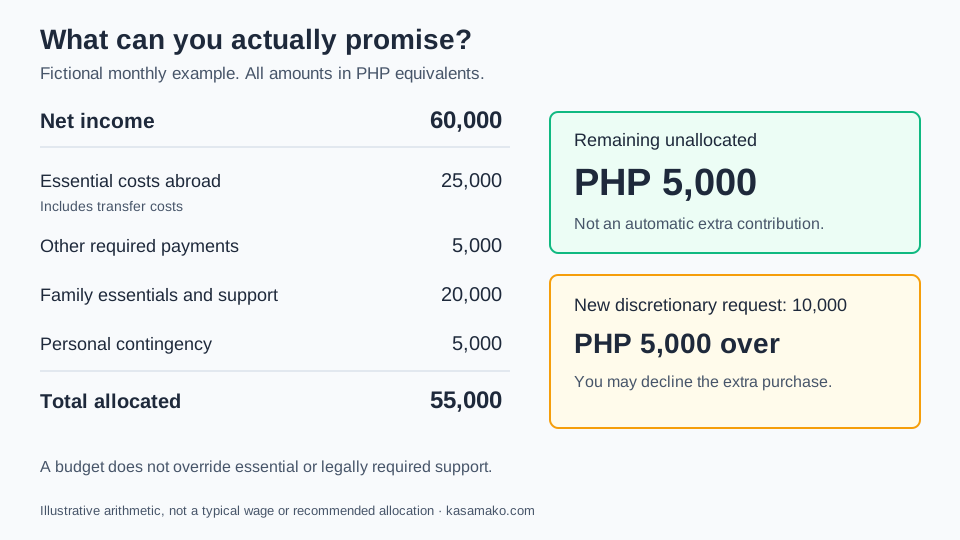
Start with the pay you actually receive. Include essential costs abroad, existing obligations, family necessities, transfer costs, and some room for your own unexpected expenses where possible. Overtime you have not worked and a bonus you have not received cannot fund a dependable promise.
This approach follows the basic budgeting process in BSP’s Personal Financial Management material: identify income and expenses, adjust the plan, and track spending. The amounts below are our own fictional monthly example, in Philippine-peso equivalents, not a typical OFW salary or a recommended split.
| Monthly item | PHP |
|---|---|
| Net income | 60,000 |
| Essential living costs abroad, including transfer costs | 25,000 |
| Required payments outside the family-support line | 5,000 |
| Planned family essentials and dependent support | 20,000 |
| Personal contingency allocation | 5,000 |
| Remaining unallocated money | 5,000 |
The allocations total PHP 55,000. An extra PHP 10,000 request for a celebration exceeds the remaining money by PHP 5,000. You may decline it. You do not have to hand over the remaining PHP 5,000 either.
If the calculation leaves nothing, acknowledge that. Revisit expenses and commitments with the people affected; a more confident tone cannot fix an income shortfall.
Essential support needs separate consideration. The Philippine Family Code covers support obligations between certain relatives. Articles 194 and 195 address needs and relationships; Article 201 considers the giver’s means and the recipient’s necessities. A personal budget cap does not override a legal duty or court order. If an obligation is disputed or unaffordable, get qualified legal help rather than treating this article as permission to stop paying. Source: Family Code, Title VIII.
Tell Them Before the Next Request
Choose a private conversation with the person who manages household expenses. If a spouse or co-parent shares responsibility for the budget, work through the plan together. Ask what the money currently covers before announcing a figure.
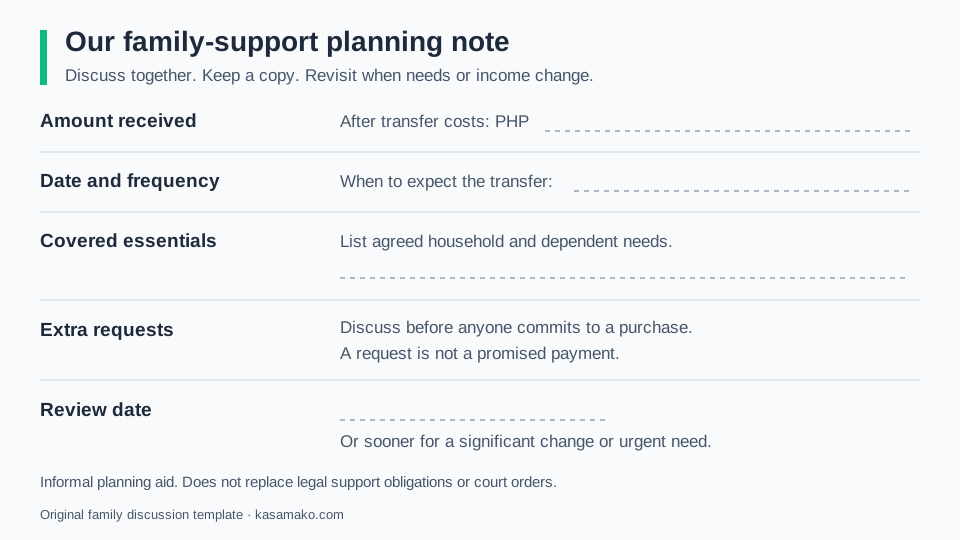
Then make the practical details clear: amount, date, covered expenses, and when you will review it.
“Ma, starting next month, I can send PHP 20,000 on the fifth for the groceries, medicines, and school transport we listed. Extra purchases need a separate conversation before anyone orders them. Let’s review the essentials at the end of November, or sooner if something important changes.”
This is example wording. Use a date compatible with your actual pay schedule and obligations. Explain whether the amount is what arrives at home after transfer fees.
If this reduces established support, give notice where possible and identify the specific shortfall together. A parent cannot reorganize a prescription or a child change school arrangements just because you have sent a firmer message.
Follow the conversation with a short written recap. Invite corrections if you misunderstood an essential expense. The note below is an informal planning aid, not a legal agreement or a way to change anyone’s rights.
Six Replies for Difficult Money Requests
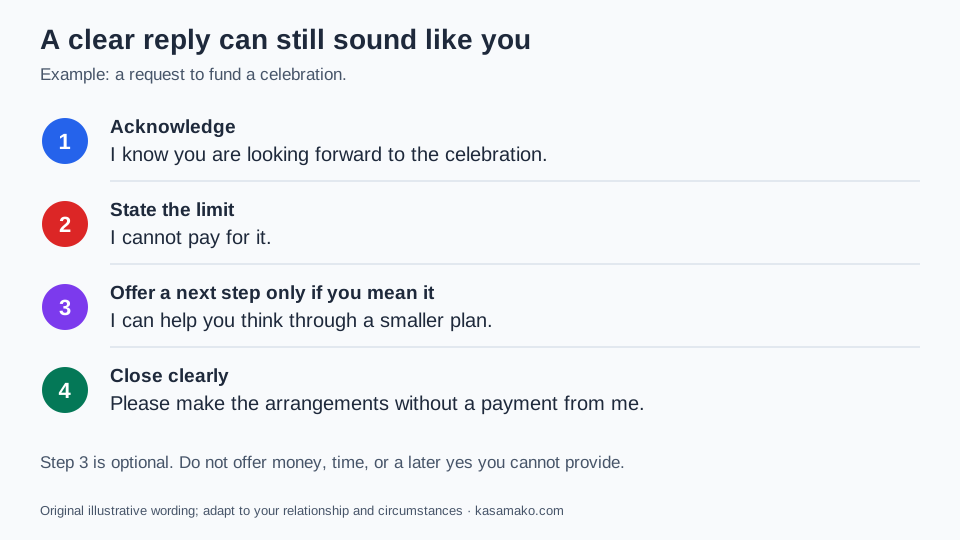
Western Australia’s Centre for Clinical Interventions recommends brief, honest, respectful refusals and warns against offering a later yes unless you mean it. That communication guidance is useful here; the OFW examples below are original editorial scripts, not quotations from its workbook. Source: CCI, How to Say No Assertively.
Adapt the English and Tagalog to how you actually speak. A warm sentence you would normally say is more useful than a speech that sounds borrowed.
1. An extra request after the regular padala
“The household amount is already sent. I cannot add money for the new phone. Please don’t order it expecting another transfer from me.”
“Naipadala ko na ang panggastos natin. Hindi ako makakadagdag para sa bagong phone. Huwag muna kayong umorder na umaasang ako ang magbabayad.”
Name the purchase. “No more money for anything” is much broader and may create uncertainty about food or medicine. If the request is unclear, find out what it covers before answering.
2. “After everything we did for you?”
“I remember what you did for me, and I am grateful. I cannot pay for this trip. The regular support we agreed on will continue.”
“Hindi ko nakakalimutan ang tulong ninyo. Nagpapasalamat ako. Pero hindi ko kayang sagutin ang biyaheng ito.”
You may feel the weight of utang na loob. You can acknowledge that history without inventing room in this month’s budget. Avoid turning the conversation into a list of everything each person has sacrificed.
3. “It is only a loan. I will return it.”
“I cannot lend this amount. I need that money for my own bills, even if you expect to repay it soon.”
“Hindi ako makakapagpahiram ng halagang iyan. Naka-budget na iyon para sa mga bayarin ko.”
A promised repayment date does not make money available today. Only consider lending if you can manage the possibility of delay or nonpayment. Do not describe an unaffordable loan as a small favor to make the conversation easier.
4. A claim on your bonus
“I haven’t received the bonus yet, and I have not committed it. Please check with me before making any plans that need my money.”
“Hindi ko pa natatanggap ang bonus. Kausapin muna ninyo ako bago magplano ng gastusing ako ang sasagot.”
If it has arrived, say what you have actually decided: “I can contribute this amount to the celebration.” You do not need to imply the whole bonus is available for negotiation.
5. A request in the family group chat
“I’ll discuss the details with you privately. I am not committing an amount here.”
“Sa private message natin pag-usapan. Wala pa akong ipinapangakong halaga.”
Follow up privately if you said you would. Moving the conversation should protect dignity, including the requester’s, rather than leave someone publicly waiting for an answer that never comes.
6. “Please. Just this once.”
“I understand you were hoping I could cover it. My answer about the celebration is still no. I cannot take it on.”
“Naiintindihan kong umaasa ka. Pero hindi ko talaga kayang sagutin ang handaan.”
You can stop there. Add an alternative only if it is real, affordable, and something you want to offer. “Maybe next month” can be heard as a promise; do not use it merely to end an uncomfortable call.
When They Keep Asking
Check whether there is new information. A request that sounded like a phone upgrade might concern a broken device needed for work. Listening to a clarification does not commit you to paying.
If nothing has changed, repeat the answer rather than building a longer defense. CCI describes repeating a clear refusal as one way to respond to persistent requests. Source: CCI Module 6.
In this context, you might write: “I have checked my budget. I cannot cover that purchase.” If another relative asks on the same person’s behalf, give the same answer privately without sharing the original conversation.
When a call becomes heated, state what you will do next: “I want to discuss this calmly. I will call tomorrow after my shift.” Choose a time you can keep. Continue agreed essential support; do not make access to necessities depend on an apology.
Afterward, reread the budget before sending an extra transfer to relieve the discomfort. Did the need change? Did your capacity change? Or are you hoping the payment will make the conversation feel better?
You can reconsider a decision. Give yourself enough information to know what you are reconsidering. Someone’s disappointment deserves care, but it does not tell you whether a transfer is affordable.
When the Need Really Is Urgent
If someone needs immediate medical attention or is in danger, the person nearby should seek appropriate local help. Do not make urgent care wait while the family produces perfect receipts for a group chat.
For the money discussion, establish what must be covered now, what can wait, and who can help coordinate locally. Ask for a bill or direct contact when practical and appropriate, without circulating private medical details among relatives.
Then say what you can contribute:
“I can send PHP 3,000 today from my emergency money. I cannot cover the full bill. Can someone there ask the hospital’s social-service office what assistance may be available and help us identify the remaining amount?”
That is an illustrative request for information, not a promise that assistance exists or that the family qualifies. Other relatives may contribute money, transport, appointments, or paperwork according to their capacity.
If you make an exception, describe it accurately: “This additional amount is for today’s bill. It does not increase the regular monthly transfer.” Afterwards, check what the contribution leaves for your own essentials.
A recurring medical expense may require an ongoing plan rather than repeated emergency appeals. Revisit the household needs and shared contributions. A rigid cap cannot make a necessary expense disappear, and one overseas salary may not be enough to cover it all.
If You Have Already Promised Too Much
Correct the promise as soon as you know. The longer you wait, the more likely someone is to make plans around it.
“I said I would cover the full amount before checking my bills. That was my mistake. I can provide PHP 2,000, not PHP 8,000. I am telling you now so you don’t commit to the purchase based on what I said.”
The figures are illustrative. Apologize for the unreliable promise without adding a second unaffordable one. Explain any timing change explicitly. “I’ll try” is not useful if you already know the money will not be there.
If the commitment concerns necessities, discuss the gap with the person responsible for those expenses. Identify what is due first and whether another arrangement is possible. Existing legal duties or court orders need appropriate advice; a revised text message does not change them.
For future discretionary requests, use a checking sentence: “Let me review my budget. I will answer tomorrow evening.” Then answer at that time, even if the answer is no.
You are allowed to be more careful after making a mistake. The repair is clearer information and follow-through, rather than a promise to say yes faster next time.
Keep the Relationship Bigger Than the Transfer
Make room for a call that is not a budget meeting. Ask about the ordinary things you miss: a school activity, a parent’s garden, a sibling’s new routine. Share something from your own day, too.
When money needs discussing, agree a time where possible, so it does not take over every conversation. This will not suit every emergency or family, but it gives you a place to start.
Remember that contribution is not always income. A relative caring for your child or an ill parent may be doing work that makes your overseas job possible. Disability, age, and a difficult job market can also mean someone needs continuing support.
Invite those realities into the plan. “What does the household need, and what can each of us realistically do?” leaves more room for an honest answer than asking when everyone will finally stop needing help.
When a Conversation Is Not Safe
Ordinary disagreement and disappointment do not automatically mean abuse. However, forced borrowing, blocked access to your own money, and intimidation used to control finances can be warning signs. Australia’s 1800RESPECT financial-abuse toolkit describes these patterns; its support services are Australia-specific.
If you fear retaliation, seek confidential help appropriate to your location before announcing changes that could increase danger. A trusted person or local specialist service can help you consider safer next steps. If your account is compromised, contact your financial institution through its official support channel when safe.
For immediate danger, use emergency services where you are. Our OFW emergency and embassy guide explains the different assistance routes. A refusal script cannot assess your safety, and you do not have to handle threats through a family group chat.
Your Next Payday Plan
Before the next salary arrives, write down four things:
- The regular support you can sustain, with essential needs and obligations accounted for.
- The transfer date and what the recipient should expect to receive.
- One reply for an extra request you commonly receive.
- A review date, with room to discuss significant changes sooner.
Discuss the plan with the people directly affected. Keep a copy for yourself so you are not reconstructing it under pressure.
Start with one clear conversation. You do not need a family-wide announcement about your new boundaries. You need an understandable promise, a realistic amount, and the ability to answer the next request without guessing.
Frequently Asked Questions
Am I selfish if I feel relieved after saying no?
Relief alone does not tell you whether a decision was right or wrong. Look at what you declined, the needs involved, and your actual capacity. You can care about someone and feel relieved that you have not taken on another discretionary expense. Mixed feelings do not require an immediate transfer.
Do I have to tell every relative my salary?
You can discuss what you can contribute without sending your payslip to an extended-family chat. Shared finances with a spouse, co-parenting responsibilities, and legal disclosure requirements are different matters. Be honest with people entitled to relevant information. Financial transparency also does not require handing over passwords or one-time security codes.
Can I use these scripts to stop supporting my children or parents?
Do not use a general boundary script to cancel necessary or legally required support. Philippine law recognizes obligations between certain relatives and considers means and needs. If the amount is disputed, seek qualified advice about your circumstances. The examples about phones, trips, and celebrations address a different kind of request. Source: Family Code, Articles 194-202.
Should I borrow when my family has an emergency?
Urgency does not remove repayment costs. Establish the immediate need, available contributions, and possible assistance first. Before taking a loan, understand the full repayment amount, fees, due dates, and effect on your essentials. There is no responsible blanket answer that every OFW should borrow, or that every emergency can be managed without borrowing.
What if one exception becomes the expected amount?
Clarify it promptly: “Last month’s extra transfer covered that specific bill. The regular amount remains what we agreed.” If the expense has become recurring, review it openly instead of repeatedly calling it an exception. Updating a plan when needs or income change is compatible with having boundaries.
What Kasamako Is Building
Kasamako is developing a pre-signing OFW contract checker to help workers examine pay, deductions, working hours, rest days, employer details, and changed clauses. Knowing what your contract actually promises gives you a better starting point for the commitments you make at home.
The tool will not resolve family disputes or decide how much support you legally owe. To hear when it is ready to test, join the early-access list. Please keep private family messages, financial records, and urgent requests out of the waitlist.
Sources and a Word About Me
Sources checked September 8, 2026:
- BSP: Personal Financial Management - budgeting process; the peso example in this article is independently constructed.
- Centre for Clinical Interventions: How to Say No Assertively - concise, respectful refusal and responses to persistent requests. The family scripts are original illustrative examples.
- Supreme Court E-Library: Family Code, Title VIII - support provisions, particularly Articles 194, 195, 201, and 202.
- 1800RESPECT: Financial Abuse Support Toolkit - warning signs involving financial control; an Australian resource, not a worldwide assistance service.
Related reading:
- OFW Investment Guide: Where to Put Your Savings in 2026 - once you identify money you can keep, compare savings options by access, risk, and overseas usability.
- OFW Lifestyle Inflation: How to Stop Being the Family ATM - build the monthly support budget that gives these conversations a starting point.
- The Loneliness Nobody Talks About: A Letter to New OFW - keep connection with home from becoming only a conversation about bills.
- OFW Emergency Hotlines and Embassy Help - identify the appropriate assistance route when immediate danger requires more than a family conversation.
Kasamako (in development): Join the early-access waitlist
I’m a software developer building Kasamako, not a financial advisor, lawyer, psychologist, counselor, or government representative. This article is educational, not financial, legal, mental-health, or emergency advice. The conversations and budget are fictional examples, not real OFW testimonies or a recommended household allocation. Legal requirements, government information, and available services can change; verify the current details and get qualified advice for your circumstances.
No affiliate links. No paid placements. Kasamako is not selling loans, investments, counseling, or recruitment services.
Ingat lagi.
Comments
You can also email team@kasamako.com. Email is private and is not posted as a comment.